Flying with little ones
Baby Travel Essentials: What to Pack for a Flight
Baby travel essentials are a short list, not a full suitcase. For a flight, the essentials are the things the baby needs in the…
Travel packing with baby is not a list — it is a system. A list tells you what to bring. A system tells you where each thing goes, when you will need it, and what happens when the flight is delayed. Pack by bag, by trip length, and by age, and the same small kit works for a weekend and for two weeks.
The two posts this guide builds on are the list and the leave-behind: our baby travel essentials guide is the short list of what to pack, and our what not to pack guide is the 20 things the destination already provides. This article is the method — how to pack it all, in which bag, and in what order.
Every trip with a baby runs on three bags. The flight bag is the one-bag diaper bag: nappies for the flight plus two extra, wipes, a changing mat, nappy bags, one full change of clothes for the baby, a spare top for you, and the feeding for the flight plus one extra feed. It goes under the seat in front of you, never in the overhead bin.
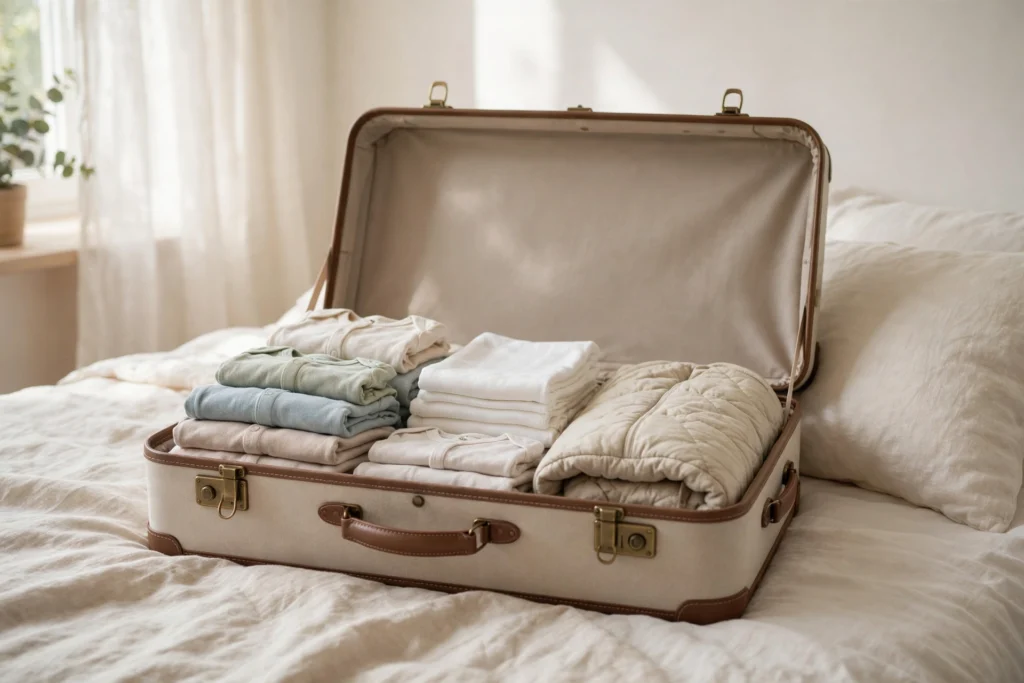
The suitcase is the hold bag: the rest of the clothes, the sleep gear, and the spares. Pack four days of clothes and wash at the destination — babies triple-outfit some days and skip others, and a laundry-week wardrobe is the heaviest mistake on any packing list. The day bag is the third: a small bag for the first day at the destination, with a change of clothes, snacks, and the comfort toy, so you do not open the suitcase at the airport.
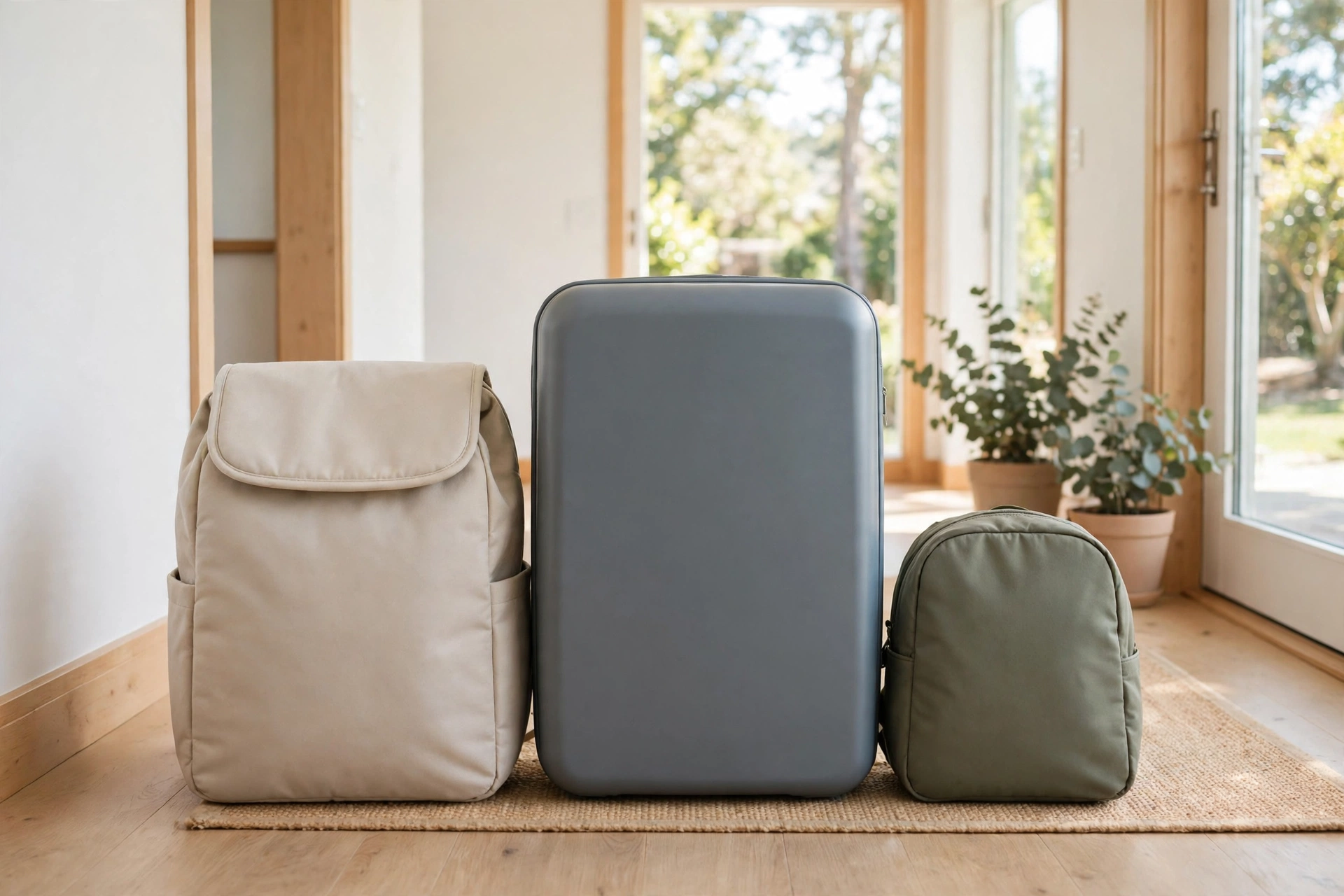
A weekend trip and a two-week trip do not need different packing — they need different buying. For a weekend, pack the journey’s worth of consumables and the trip’s worth of clothes. For a week or more, pack the journey’s worth of consumables and buy the rest there: nappies, wipes, cream, and baby wash are sold within walking distance of almost anywhere you will sleep.
The rule is simple: pack for the journey, buy for the trip. A longer trip earns a bigger shopping list at the destination, not a bigger suitcase at home. The exception is a genuinely remote destination — a beach town with three supermarkets is not remote, but a cabin with no shops is, and that trip earns a bigger bag honestly.
A newborn’s bag is mostly feeding and changing: milk or formula, nappies, wipes, a changing mat, and two spare outfits, because a newborn changes clothes more than a toddler does. The sleep cues matter most at this age — the same sleep sack and blanket from home, used from the first night.
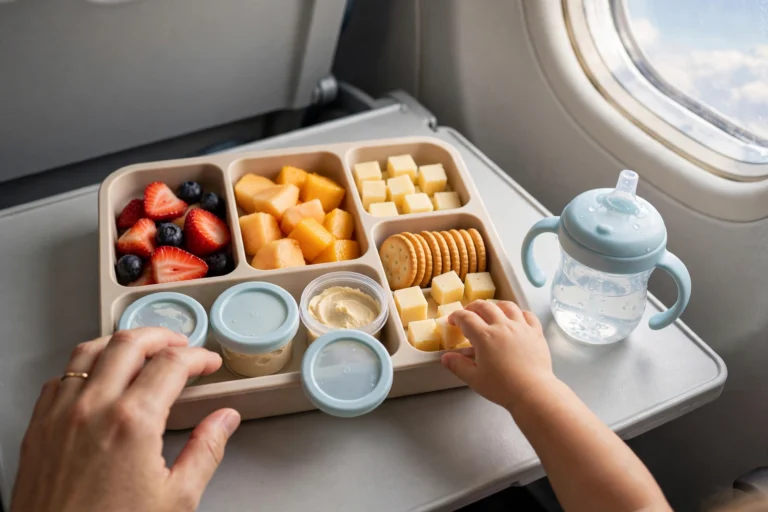
A baby of 6 to 12 months adds food and movement: a few soft snacks in separate pouches, a cup the baby already uses, and clothes that survive crawling. A toddler adds entertainment and independence: two or three small snacks, one comfort toy, and a change of clothes the toddler can help choose. The bag does not grow with age — the contents change, and the system stays the same.
Breast milk, formula, and baby food are exempt from the usual liquids limit at security — that is the rule that makes packing for a baby different from packing for an adult. Declare them at security and keep them where you can reach them, not buried under nappies at the bottom of the bag.
Our flying with breast milk and formula guide covers the full rules: what counts as exempt, how to pack it, and what to say at security. The packing point is simple — liquids go in the top pouch of the flight bag, where security can see them and you can reach them without unpacking.
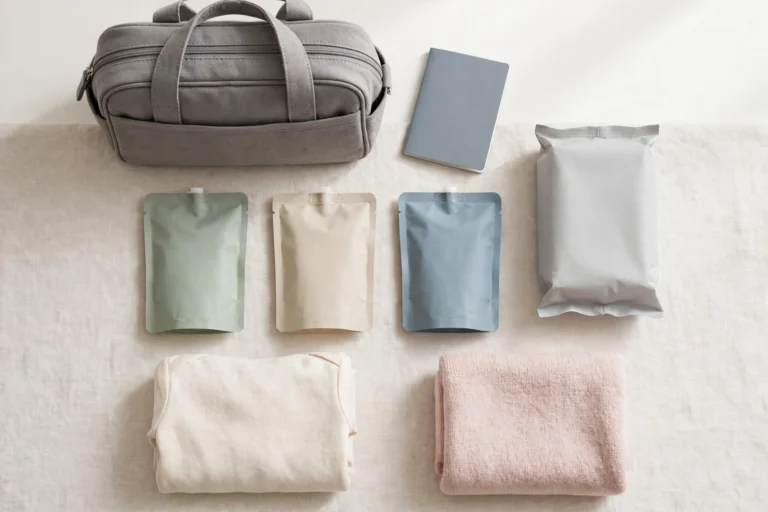
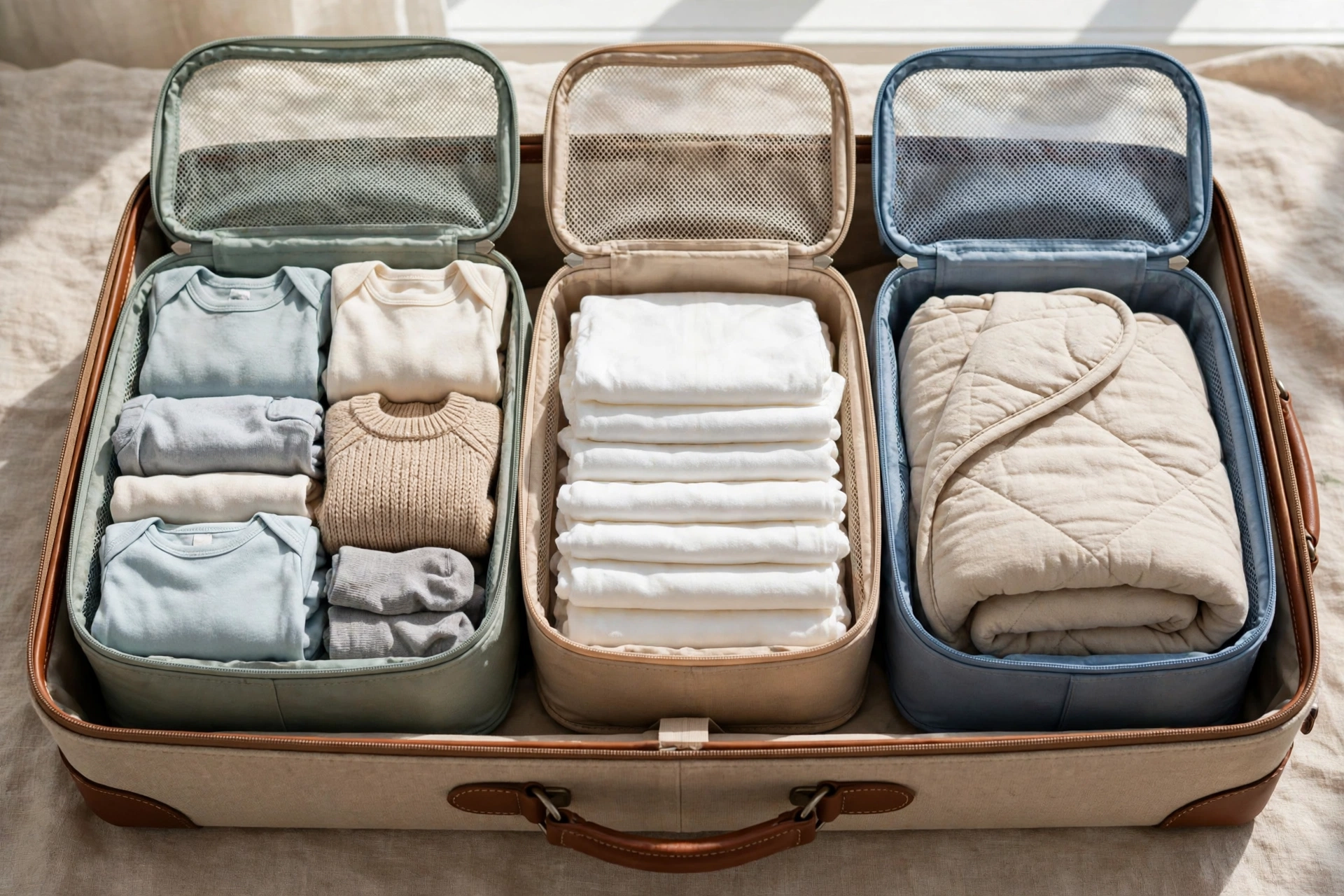
Pack in pouches, not piles. One pouch for clothes, one for nappies and wipes, one for sleep — a sleep sack, a light blanket, and the dummy or comfort toy. Roll the clothes instead of folding them: rolled clothes take less space and come out less creased, and a rolled spare outfit is easier to pull out one-handed while holding a baby.
Keep the spare outfit in its own pouch inside the flight bag, so a change at 35,000 feet does not mean unpacking everything. Weigh the suitcase before you leave: most airlines charge for an overweight bag, and a baby’s bag is the one that creeps over the limit with one extra pack of nappies. Check your airline’s own baggage allowance before you travel — the numbers change by airline and by ticket.
Pack the flight bag the night before, not the morning of the flight. Passport and booking together in one pocket, flight bag packed, spare outfit in its pouch, snacks portioned. The suitcase can wait until the morning — the flight bag cannot, because a rushed flight bag is the one that forgets the spare top.
On the flight day, feed before leaving, change the nappy, put the layers on, and keep the flight bag under the seat. At the gate, confirm the folded stroller or crib plan with staff. In the air, feed or drink at takeoff and landing, one snack at a time. On arrival, the sleep sack and blanket come out first, and the crib is set up before anything else is unpacked. If you are flying with a baby for the first time, the night-before routine is the whole trick — the flight itself is the easy part.
Use three bags: a flight bag with nappies, wipes, a change of clothes and feeding for the flight plus one extra feed; a suitcase with four days of clothes and the sleep gear; and a small day bag for the first day. Pack the flight bag the night before.
Enough for the flight plus two extra in the flight bag, and one more set in the checked bag. Delays are the reason for the extras, not the flight itself. Buy the rest at the destination.
Yes — breast milk, formula, and baby food are exempt from the usual liquids limit. Declare them at security and keep them in the top pouch of the flight bag, where you can reach them.
Four days of clothes, then wash at the destination. A longer trip earns a bigger shopping list there, not a bigger suitcase at home — unless the destination is genuinely remote.
The flight bag holds what the baby needs in the air and on the first night: documents, feeding, nappies, a change of clothes, and the sleep cues. The suitcase holds the rest of the clothes, the sleep gear, and the spares.
Only if it is a genuinely light, folding travel crib — and confirm with your airline first whether it counts as a carry-on or as baby equipment. If the hotel provides a crib, you may not need to carry one at all.
Baby travel essentials are a short list, not a full suitcase. For a flight, the essentials are the things the baby needs in the…
The best snacks for toddler on plane trips are familiar, low-mess, slow to eat, and easy to hand out one at a time. Pack…
Direct answer Flying with a 6-month-old is easier than flying with a toddler and different from flying with a newborn, because a 6-month-old is…