Flying with little ones
Best Snacks for Toddler on a Plane: The Complete Guide
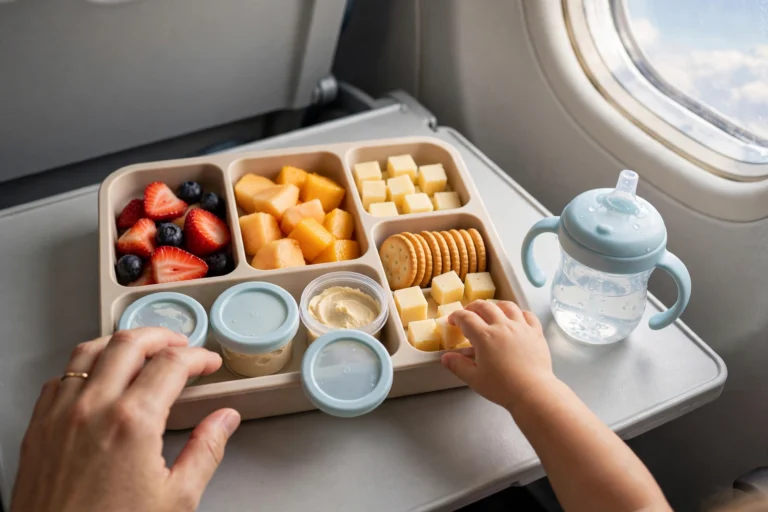
The best snacks for toddler on plane trips are familiar, low-mess, slow to eat, and easy to hand out one at a time. Pack…
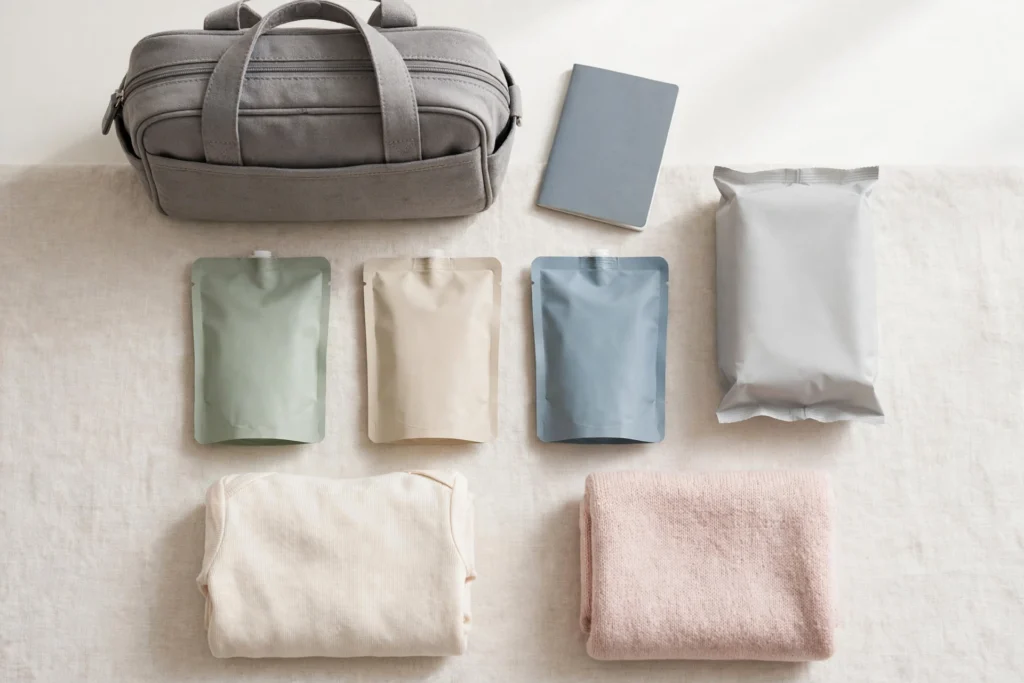
Baby travel essentials are a short list, not a full suitcase. For a flight, the essentials are the things the baby needs in the air and on the first night: documents, food, nappies, a change of clothes, and something familiar to sleep with. Everything else is either in the checked bag or better left at home. This guide is the short list, with the detail kept in the posts it links to — it does not repeat their full packing lists.
Pack the flight bag first, then the suitcase. If the flight bag is right, a delay, a missed connection, or a late arrival is an inconvenience, not a crisis.
Documents are the one essential that cannot be replaced at the airport. For international flights, a baby needs their own passport — a parent’s passport does not cover a child. Check the expiry and the destination’s rules before you travel, and keep the passport, the booking confirmation, and the baby’s ticket details together in one pocket of the flight bag, not buried under nappies.
For a domestic flight, check what your airline asks for before you travel. The rule changes by airline and by country, so the airline’s own page is the one to trust, not a packing list.
Pack milk or formula for the flight plus one extra feed, in case of a delay. Use the bottle or cup the baby already knows, and keep it where you can reach it without standing up. A feed or a drink during takeoff and landing also helps with ear pressure, which is the main reason feeding on a flight matters beyond hunger.
For a toddler, add water and two or three small snacks in separate pouches, so one snack comes out at a time. Keep the snacks soft and easy to hold, and keep the wrappers in a small bag — a tidy seatback pocket is easier to manage than a loose pile of packets.
The diaper bag is the flight bag. Pack it as a one-bag diaper bag: nappies for the flight plus two extra, wipes, a changing mat, nappy bags, hand sanitiser, and one full change of clothes for the baby. Add a spare top for yourself, because a spill on you is as likely as a spill on the baby.
Keep the bag under the seat in front of you, not in the overhead bin. If the baby needs changing mid-flight, you want the bag at your feet, not three rows away.
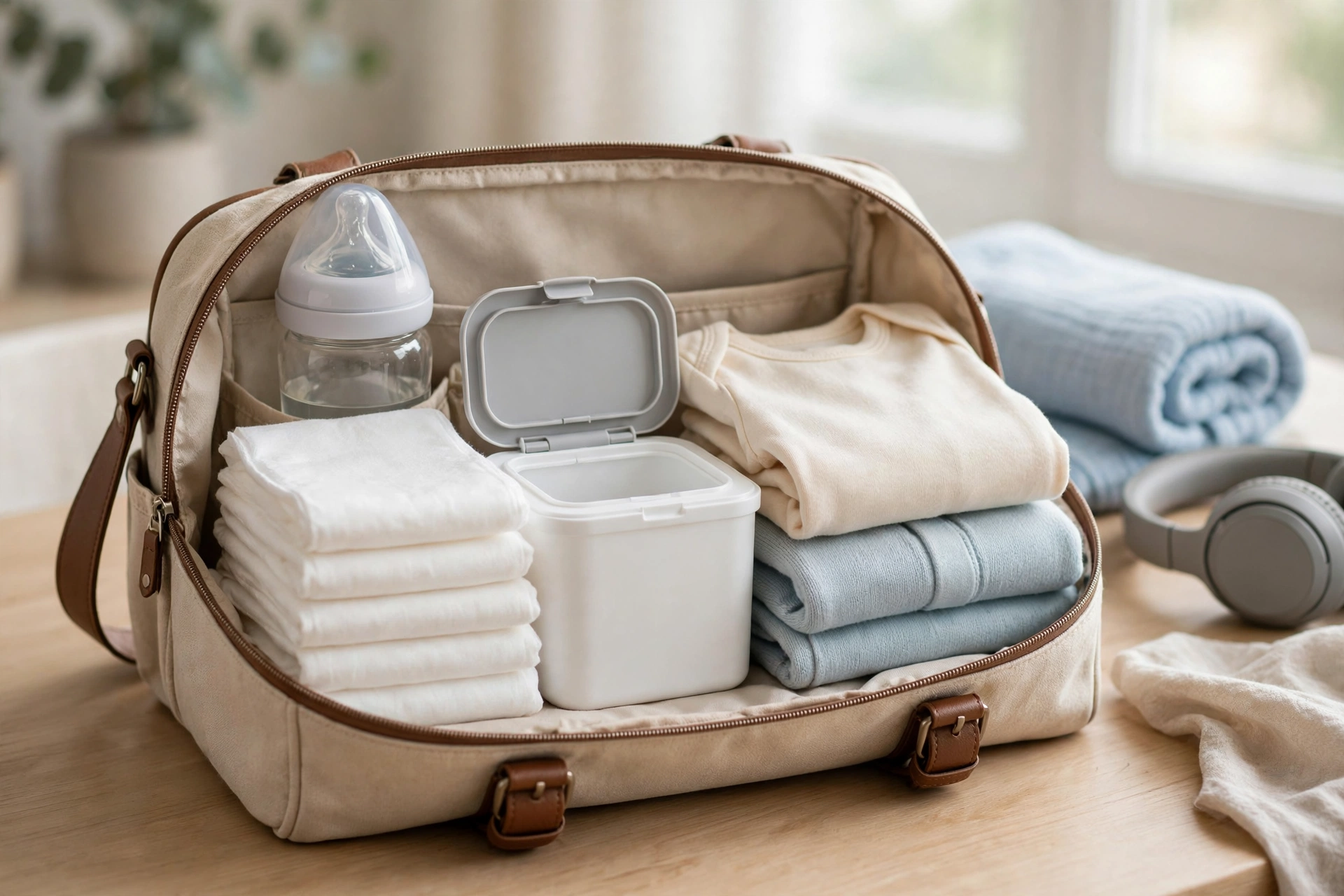
Cabins are cold and airports are warm, so layers are the essential, not one thick outfit. Dress the baby in a soft base layer, add a cardigan or zip-up, and keep a sleep sack or light blanket for the flight. Pack one full spare outfit in the flight bag and the rest in the checked bag.
Socks stay on better than shoes for a baby who is not walking, and a hat helps in a draughty airport. Keep the spare clothes in a separate pouch inside the bag, so a change at 35,000 feet does not mean unpacking everything.
Sleep is the essential most parents over-pack for and under-plan. The baby does not need new sleep gear for a trip — the baby needs the same sleep cues as at home. Bring the sleep sack and the small blanket the baby already sleeps with, and use them from the first night at the destination.
At the destination, a familiar sleep surface matters more than a familiar room. Our travel cribs shortlist covers the light options that set up in a minute and give the baby a flat, familiar place to sleep. If you are flying with a baby for the first time, confirm with your airline before you travel whether the folded crib counts as a carry-on or as baby equipment, so the plan works at the gate.
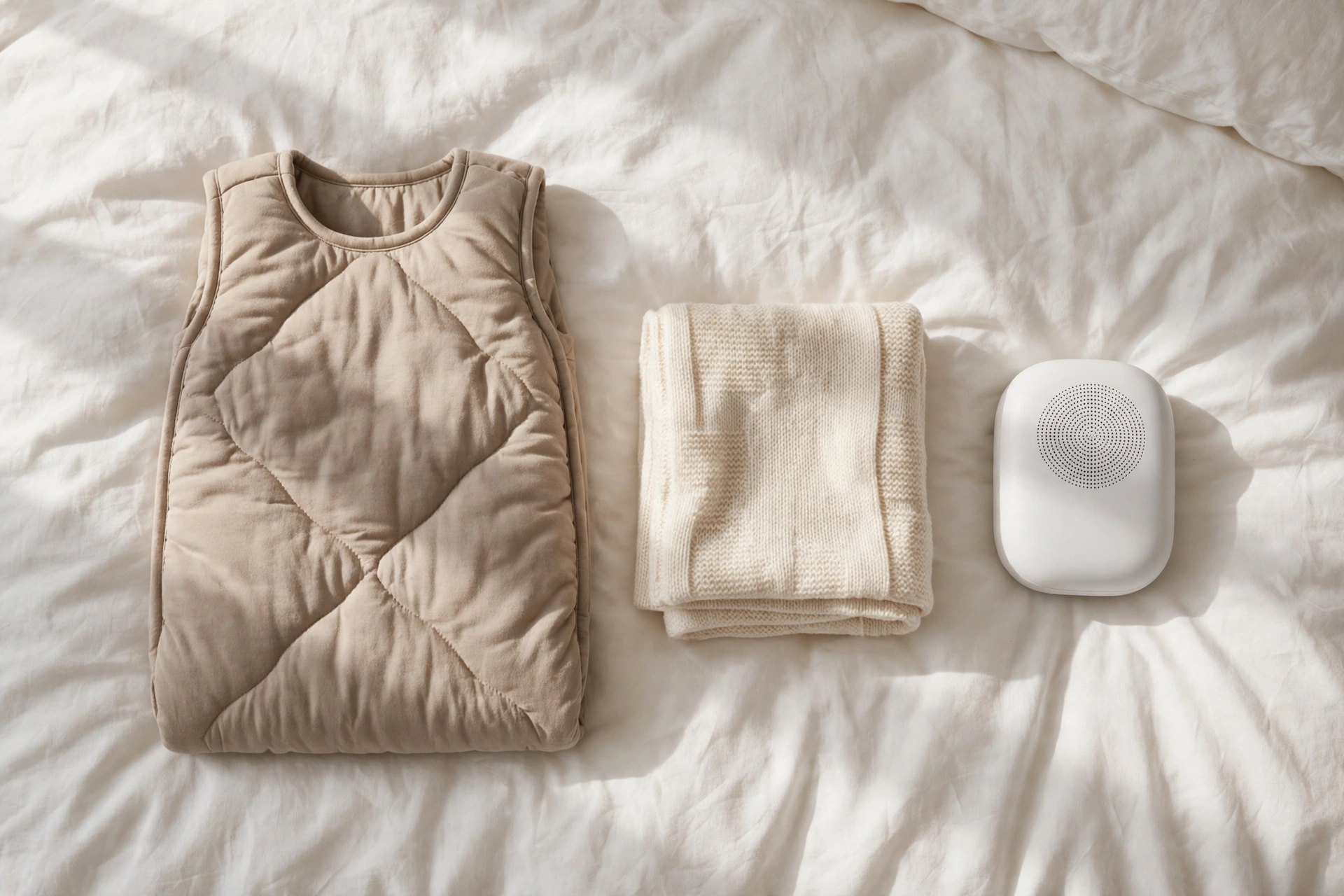
Bring the gear that solves a real problem on the trip. A carrier for the airport, when the stroller is gate-checked. A travel crib at the destination, when the hotel cot is a gamble. A car seat, when you will be driving at the destination.
Leave the gear that only adds weight. A full-size stroller is not a cabin item, and a travel system bought for the car does not become a flight item because it has the word travel in its name. If a piece of gear is heavy, folded large, or only used once on the trip, it stays home.
The other half of an essentials list is what not to bring. Our guide to what not to pack for a baby covers the common mistakes: too many outfits, full-size toiletries, toys the baby has never played with, and duplicates of things the hotel or the destination already provides.
A simple test before you zip the bag: if you cannot say when on the trip you will use it, leave it out. An essentials list that fits in one flight bag is a list you can actually carry with a baby on your other arm.
Documents, feeding for the flight plus one extra feed, a packed diaper bag, layers and a spare outfit, the baby’s sleep sack and blanket, and a dummy or comfort toy. That is the whole list — everything else goes in the checked bag or stays home.
For international flights, yes — a baby needs their own passport. For domestic flights, check what your airline asks for before you travel, because the rule changes by airline and by country.
Enough for the flight plus two extra, and one more set in the checked bag. Delays are the reason for the extras, not the flight itself.
Only if it is a genuinely light, folding travel crib — and confirm with your airline first whether it counts as a carry-on or as baby equipment. A heavy crib or a full-size travel system is a car and hotel item, not a cabin item.
Layers: a soft base layer, a cardigan or zip-up, and a sleep sack or light blanket for the flight. Cabins are cold and airports are warm, so layers beat one thick outfit.
Full-size toiletries, too many outfits, toys the baby has never played with, and duplicates of things the hotel already provides. If you cannot say when on the trip you will use it, leave it out.
The best snacks for toddler on plane trips are familiar, low-mess, slow to eat, and easy to hand out one at a time. Pack…
Direct answer Flying with a 6-month-old is easier than flying with a toddler and different from flying with a newborn, because a 6-month-old is…
Direct answer Flying with a 1-year-old is different from flying with a young baby, because a 1-year-old is usually mobile, alert, and unwilling to…