Flying with little ones
Travel Packing With Baby: A System That Actually Works
Travel packing with baby is not a list — it is a system. A list tells you what to bring. A system tells you…
There is no single best age to travel with baby. There is a best age for your trip — and it depends on whether you are flying or driving, how long the journey is, and what you need the baby to do on the way: sleep, feed, sit still, or be entertained. This guide walks through the practical picture month by month, so you can pick the window that fits your family instead of chasing one magic number.
The short version: the first months are all about feeding and sleep logistics, the middle of the first year is often the easiest flying window for many families, and the toddler years trade sleep for movement. None of that is a rule. A short car trip and a long-haul flight are different problems at the same age.
| Age band | What travel looks like | Main planning point |
|---|---|---|
| 0–3 months | Mostly sleep and feed; carried or in a bassinet | Bassinet and feeding logistics |
| 3–6 months | Longer awake windows; more alert on the move | Packing for a baby who notices everything |
| 6–12 months | Sitting up, reaching, starting to move | Containment: seat, stroller, and a safe floor spot |
| 12–24 months | Walking, climbing, opinions about everything | Movement breaks and snack planning |
| 2 years and up | More words, more stamina, own seat territory | Keeping a busy child happily occupied |
The table is a planning aid, not a developmental claim. Two babies of the same age can be completely different trips, so use the bands to ask the right questions — not to judge whether your baby is “ready”.
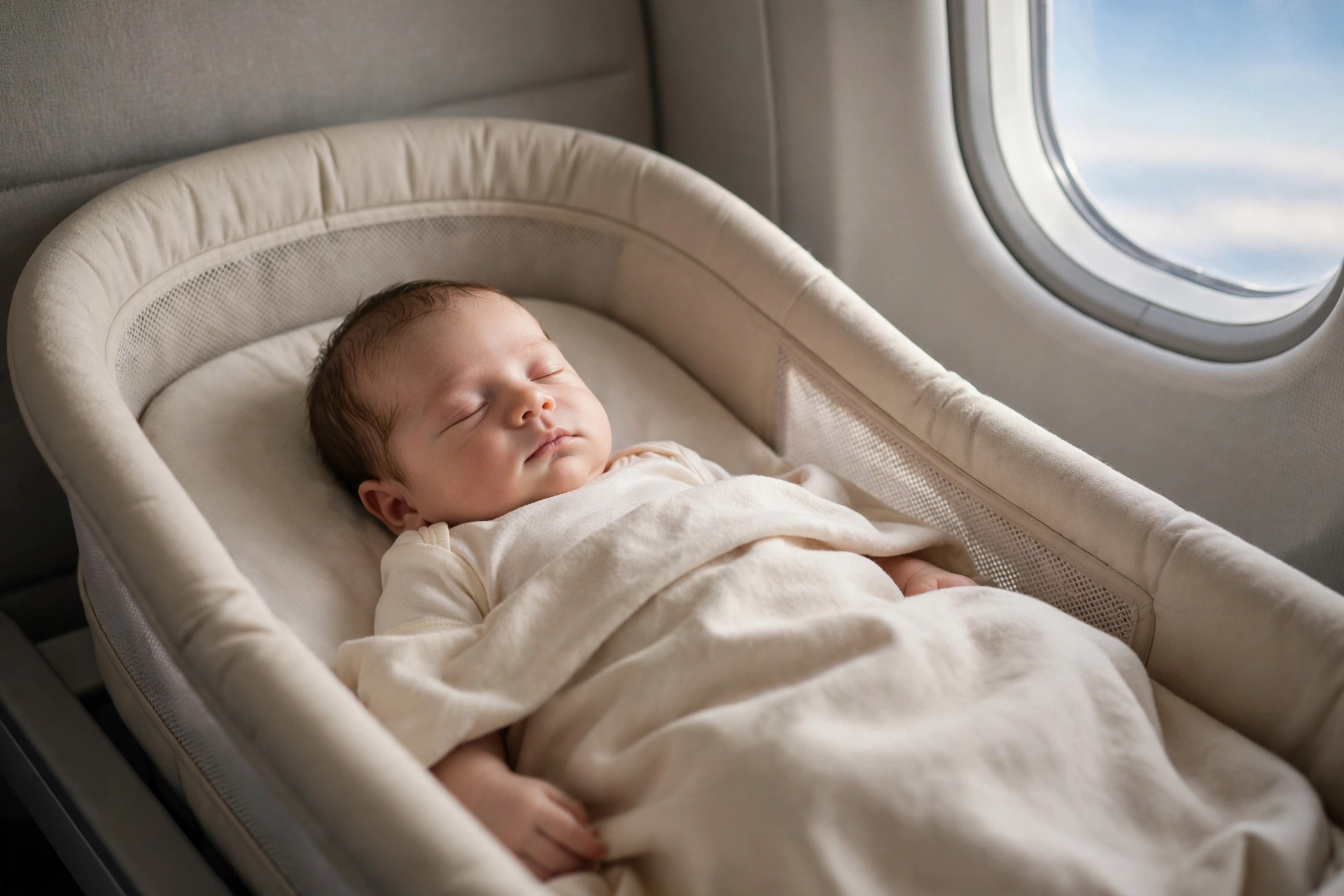
Sleep: young babies often sleep through travel days if the routine travels with them, while older babies and toddlers notice every new room. A familiar sleep setup — the same crib or travel bed, the same wind-down steps — matters more at 18 months than at 3 months.
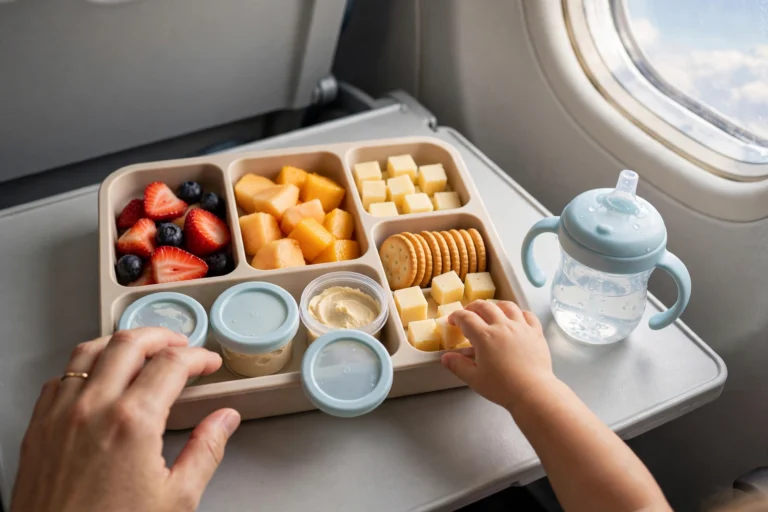
Feeding: feeding on a schedule you control is the newborn advantage. As babies move to solids, the question shifts from “when is the next feed” to “what can I actually carry and serve” — which is why snack planning becomes a real part of the trip in the second year.
Mobility: the big shift is when a baby starts to move. A baby who sat still in a carrier now wants the floor, the aisle, and every interesting object in reach. Trips after that point need planned movement breaks — aisle walks, lap time, and a safe place to crawl — built into the day.
Gear: the kit changes with the child. Early trips are about a bassinet, a carrier, and feeding gear; later trips add a stroller that folds for the gate, a travel bed, and entertainment that survives a delay. Packing by age band — instead of one giant list — keeps the bag honest.
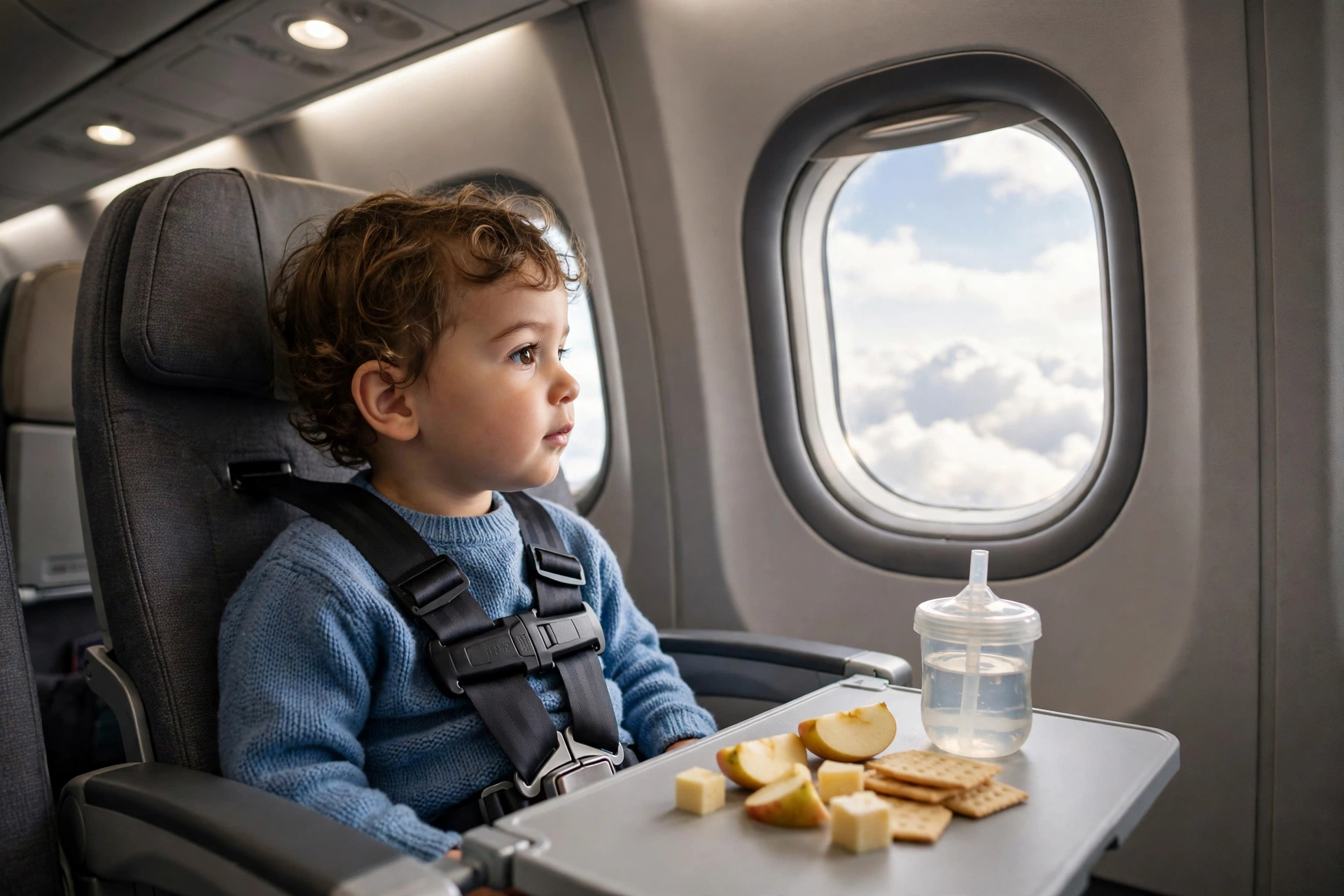
On a plane, age decides the seat question first. The youngest babies may qualify for a bassinet on some flights, which is why the airplane bassinet seats guide is worth reading before you book, not after. Older babies and toddlers usually mean a lap or their own seat and a plan for takeoff, landing, and the long middle hours.
In a car, the age question is mostly about stops. A newborn trip is a feeding-and-nappy schedule with a drive attached; a toddler trip is the same drive plus planned stops to move. Either way, the destination sleep setup is the thing to solve before you leave — a hotel cot is a gamble, your own travel bed is not.
At the destination, the first trip is the teaching trip. If this is a first flight with a baby, keep the first journey short if you can, and treat it as a rehearsal: you will learn what your baby actually needs from travel, which no guide can tell you in advance.
If you are travelling at a specific age right now, the age-specific guides go deeper: flying with a 6 month old baby covers the alert, grabby stage, and flying with a 1 year old covers the walking stage. For what to actually pack at any age, the baby travel essentials list is the bag-level companion to this guide.
Many families find the middle of the first year the easiest flying window, because babies are often content to be carried and entertained, before walking makes containment the main job. That is a pattern, not a rule — trip length and your baby’s temperament matter more than the month itself.
Newborn travel is mostly a logistics problem: feeding, sleep, and whether a bassinet is available. Waiting does not remove the problem, it changes it — an older baby needs movement and entertainment instead. Pick the age whose problems you would rather solve.
Airlines set their own minimum ages and bassinet rules, and those vary by carrier and aircraft. Check your airline’s current policy for your exact route before booking, and use the bassinet guide to understand what to ask for.
Plan movement into the day instead of fighting it: aisle walks on flights, play stops on drives, and a safe floor space at the destination. Snacks and a few trusted distractions carry the gaps between movement breaks.
Yes — the kit follows the child. Early trips lean on a bassinet, carrier, and feeding gear; later trips lean on a gate-friendly stroller, a travel bed, and entertainment. Pack from the age band you are in, not from a generic list.
Then the guide does not apply to your baby, and that is fine. Age bands are planning aids. The real readiness test is practical: feeding plan, sleep setup, movement plan, and a backup plan when the day goes sideways.
Travel packing with baby is not a list — it is a system. A list tells you what to bring. A system tells you…
Baby travel essentials are a short list, not a full suitcase. For a flight, the essentials are the things the baby needs in the…
The best snacks for toddler on plane trips are familiar, low-mess, slow to eat, and easy to hand out one at a time. Pack…