
Trips & logistics
The First Trip With a Baby: Where to Go at Every Age
Match the destination to the age and the first trip plans itself.
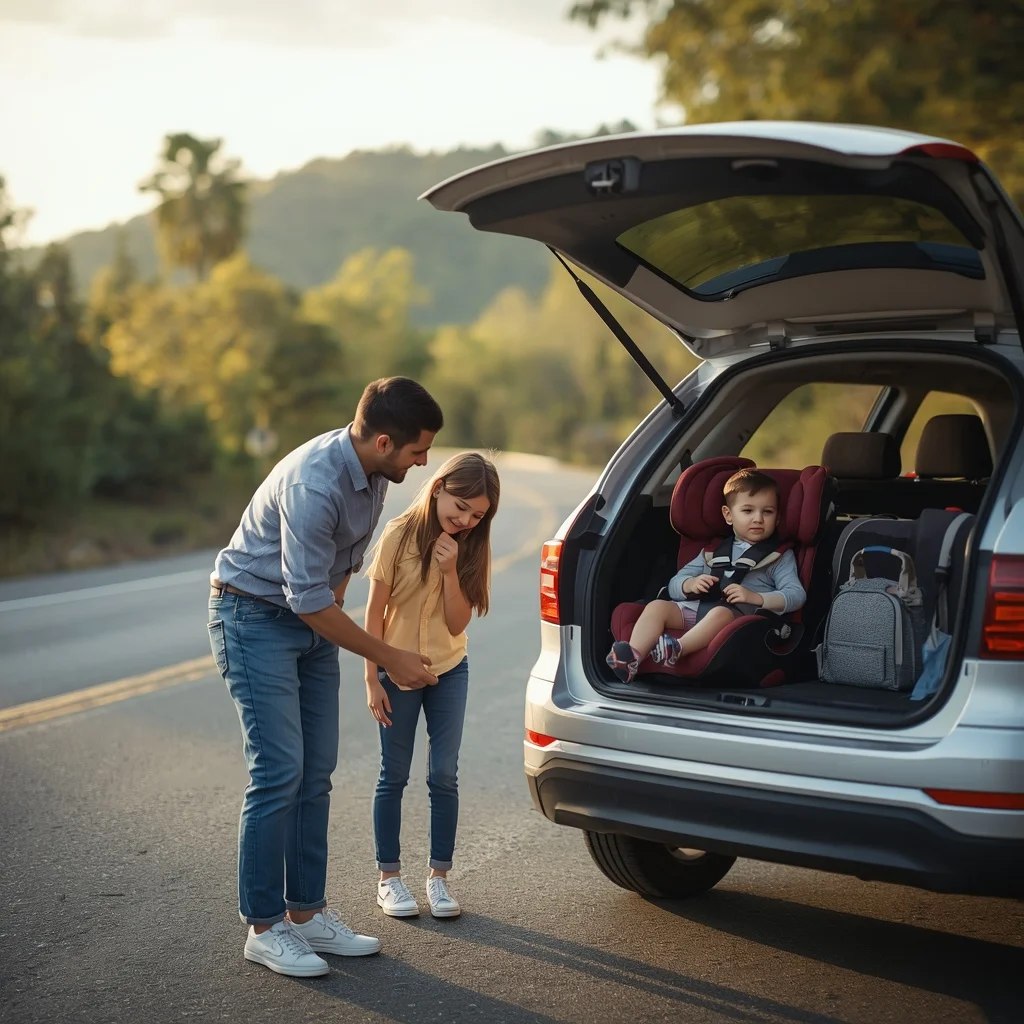
The road trip promise is freedom; the road trip with a baby is freedom in 90-minute instalments. That is not a downgrade — it is just a different vehicle rhythm, and once you plan around it instead of against it, long drives with a small passenger become genuinely pleasant.
The whole method in one line: drive when the baby sleeps, stop when they wake. Schedule departures fifteen minutes before a nap is due — the road does the settling — and treat each nap as one leg. Two naps a day equals two long legs plus a shorter evening one; that is your realistic distance, not what the map app says.
Four to five driving hours a day is the honest ceiling with a baby — 300–400 km of actual progress. Plan the route on that number and the trip stays fun; plan on adult numbers and day three becomes a hostage situation. Overnight stops follow the same booking questions as any stay, with one addition: ask about parking near the door.
The change pod lives in the front footwell, not the trunk. Add: a windscreen sunshade for the baby’s side, a cooler for feeds, muslin over the window on low-sun evenings, and the white-noise app queued for nap legs. The correctly installed seat is assumed — the car seat decision was made before the keys turned.
Pack the car like a house-move and the trip drives like one. One family bag, one baby bag, the kit up front — and the golden rule of car-boot honesty: if you can’t find it at a rainy roadside in ten seconds, it may as well be at home.
The widely cited guidance is around two hours at a stretch, less for small infants — then a proper out-of-seat break. It maps neatly onto nap length, which is why the nap-drive method works.
It works — and it trades baby-sleep for driver-sleep, which is the worse trade. If you night-drive, split it between two rested drivers and stop the moment tiredness argues back.
Under one, the window and the adult beside them are the entertainment. Mirrors (for rear-facing seats), soft books and the radio’s back catalogue cover the rest.
Match the destination to the age and the first trip plans itself.
Five questions before booking decide the whole stay. Here they are.
You planned the flight. Plan the last 30 kilometres too.