Flying with little ones
How to Book a Flight With a Baby and Add a Lap Infant
A baby must be on the flight reservation even if the baby will sit on your lap and will not occupy a seat. That…
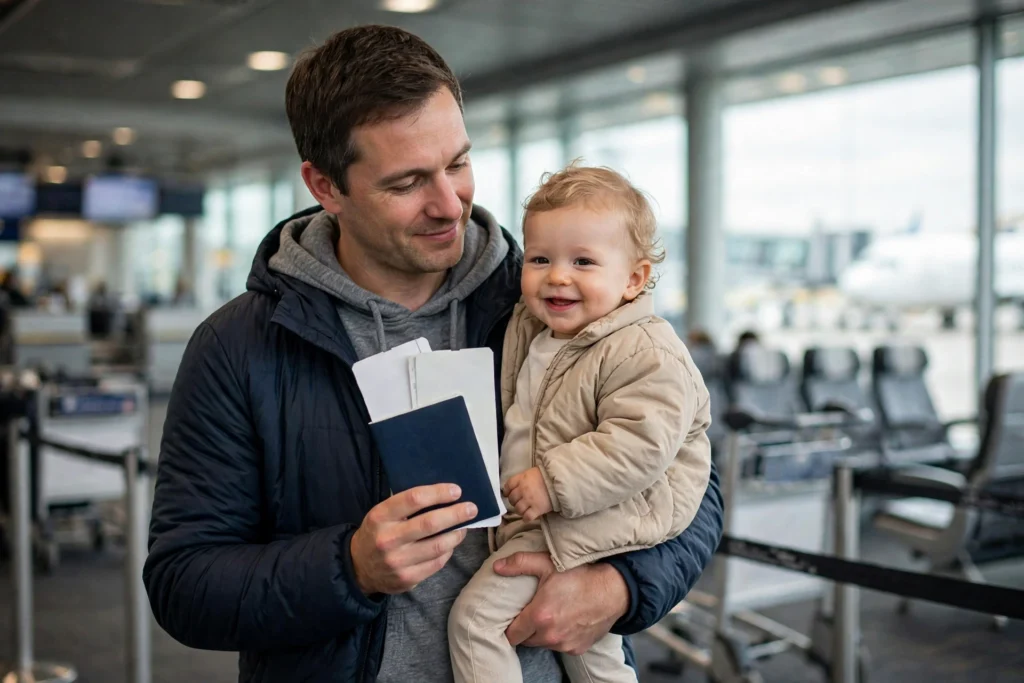
No, a baby does not need a passport for a domestic flight in the United States. Yes, a baby does need their own passport for an international flight. That short answer covers most trips, but the details matter, because the rules for security, for airlines, and for entering another country are not the same.
A baby cannot travel on a parent’s passport. For international air travel, the baby needs a passport book issued in the baby’s own name. A birth certificate, a passport card, and a parent’s passport are not substitutes for a passport book on an international flight.
This guide focuses only on passports: whether one is needed, which document works for a flight, and how to apply for one for a baby.
For domestic travel, the Transportation Security Administration states that children under 18 do not need identification for domestic flights. The adult travelling with the child must show acceptable identification at the checkpoint. The child passes through security with that adult.
There is one narrow exception in that security rule. If a child is flying alone and has TSA PreCheck, the child will need acceptable identification to receive PreCheck screening. That exception does not change the general rule for a baby travelling with a parent.
Airline rules are separate from security rules, and this is where parents are most often caught out. An airline may ask for proof of age for a baby travelling as a lap infant, usually a baby under 2 who does not have a separate seat. A birth certificate is the document most often used for that check. Bringing a copy does not mean the baby needed a passport. It means the airline needs to confirm that the baby qualifies for the lap-infant arrangement on that booking.
A practical approach for a domestic trip is simple: carry the adult’s identification, keep the baby’s boarding pass with the booking, and carry a birth certificate as well, in case the airline asks for age proof at check-in or at the gate. If the airline does not ask, nothing is lost. If it does ask, the trip is not delayed by a document left at home.
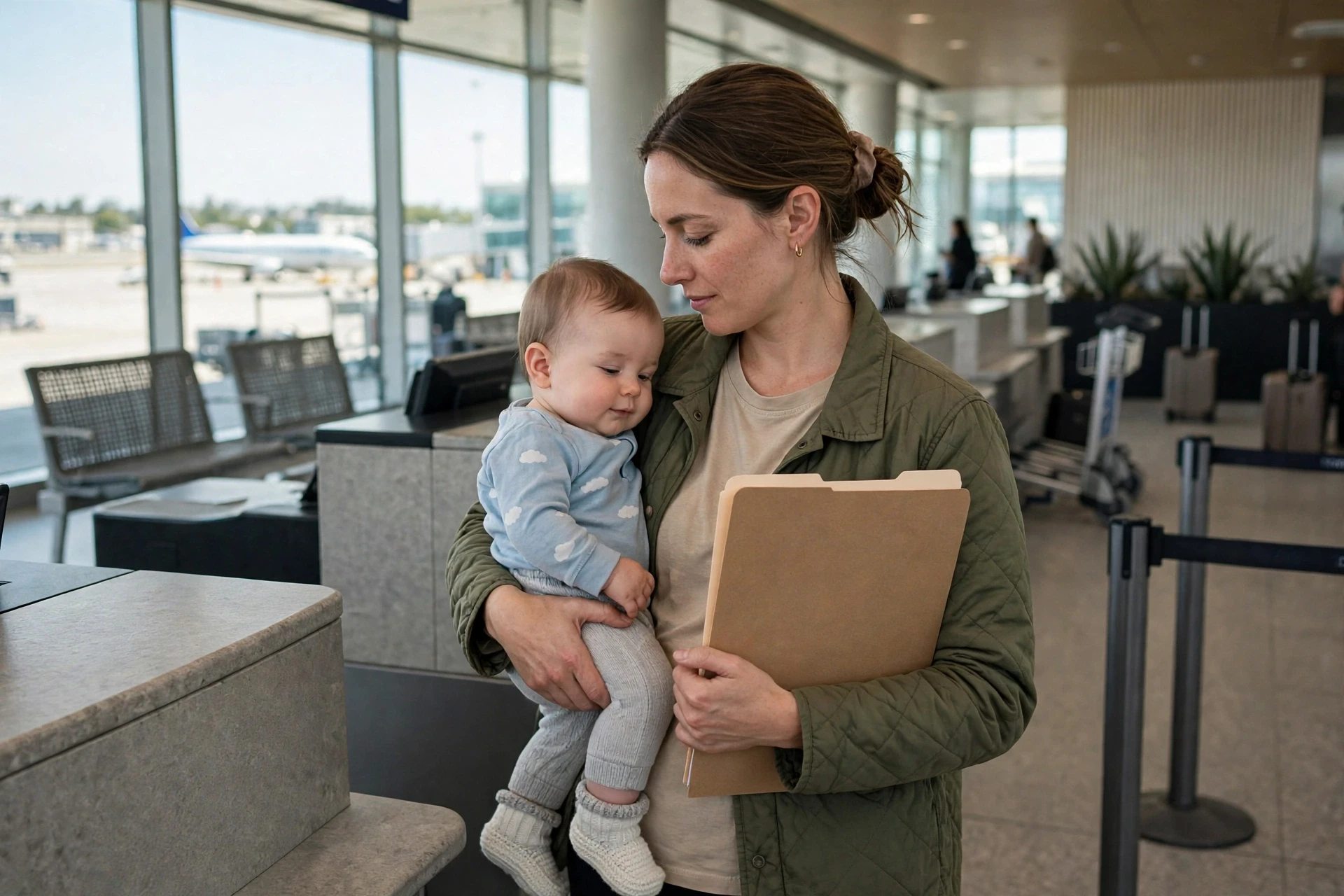
For an international flight, the position changes completely. A U.S. citizen baby travelling internationally by air needs their own passport book.
A passport book allows international travel by air, sea, or land. A passport card does not. The U.S. Department of State states that a passport card is not valid for international travel by air. It is intended for land and sea entry from Canada, Mexico, Bermuda, and some Caribbean destinations. A family that applies only for a card, thinking it will work for a flight, will find at the airport that it does not.
A birth certificate also does not replace a passport book for an international flight. A birth certificate can prove citizenship and parentage when applying for a passport, and it can help show age or relationship in other situations, but it is not the document an airline or an immigration officer will accept in place of a passport for air travel abroad.
Destination rules add a second layer. A passport may be enough to board the flight, but the destination country may also require a visa, an entry form, or other paperwork, and those requirements vary by destination and by citizenship. Check the destination’s entry rules before booking, rather than assuming that a U.S. passport alone settles every requirement. Rules can also change, so a check made months before travel should be repeated closer to departure.
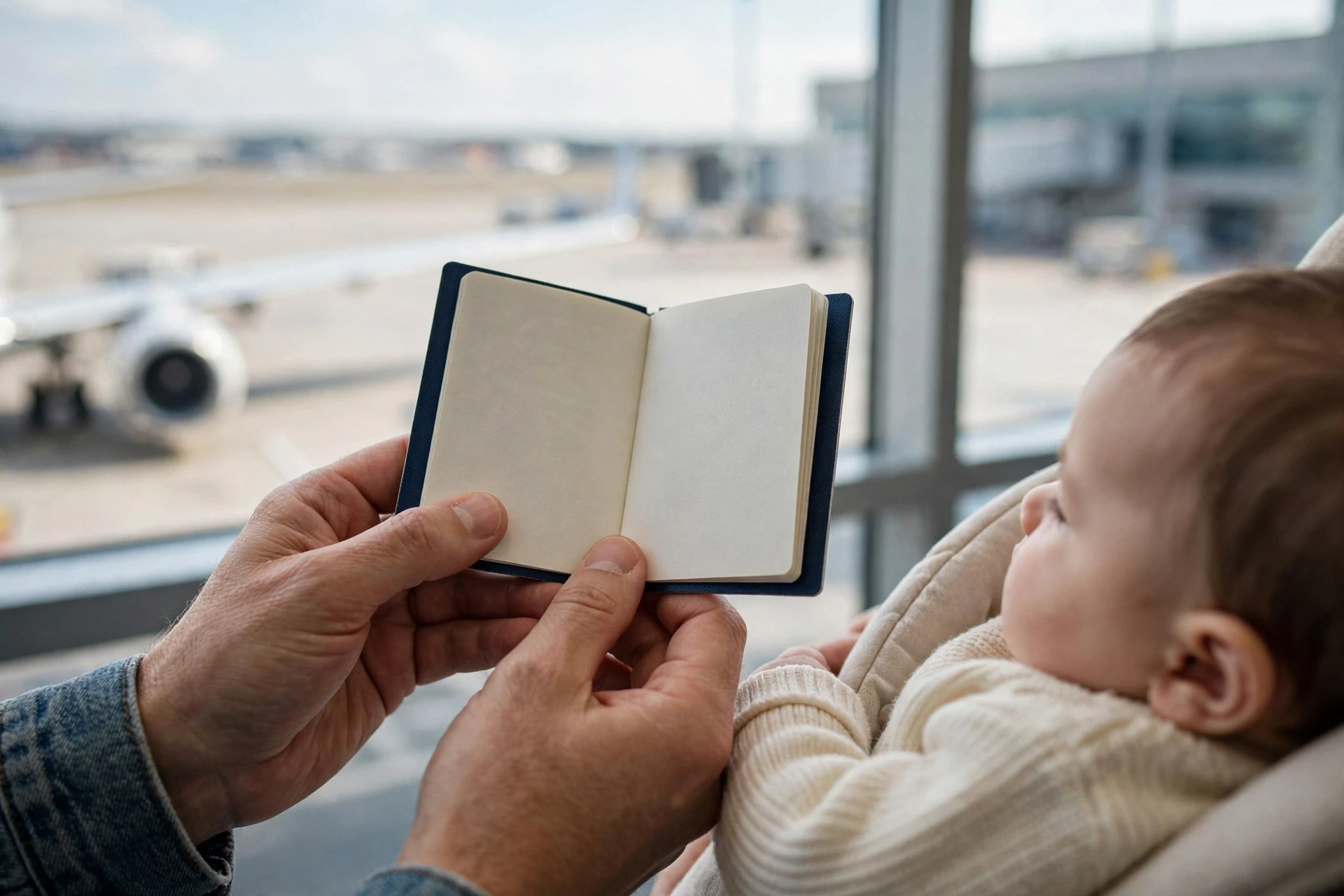
Mexico is a useful example because it shows how the general rule works in practice. A flight to Mexico is international air travel, so the same passport-book rule applies. A baby flying to Mexico needs their own passport book, even as a lap infant, and a passport card alone will not work for that flight.
The confusion often comes from land and sea crossings, where different documents may be accepted. That difference does not carry over to flying. For a flight, the question is not whether the destination is close or familiar. It is whether the journey is by air, and for air travel the passport book is the document to carry.
A passport proves identity and citizenship. It does not, by itself, prove that a child has permission to travel with the adult who is present. Some destinations and airlines may ask for additional evidence when a child travels with only one parent, with a grandparent, or with another guardian. A consent letter from the absent parent is the document most often discussed in that situation.
Because requirements in this area vary by destination, do not treat a consent letter as a universal replacement for a passport, and do not assume it will never be asked for. If a child will travel without both parents, check the destination’s rules and the airline’s policy before travel, and carry any consent or custody documents that apply to your family situation. Keep originals and copies in different places, so a lost bag does not leave you without any proof at all.
Passports for children under 16 follow a different process from adult passports, and the differences are worth knowing before an appointment is booked.
Both parents or guardians must be present with the child when applying in person, unless additional documents are provided. The child must also be present. A child’s passport cannot be renewed by mail. Each time a passport expires, the child must apply in person again.
Passports for children under 16 are valid for 5 years. That period is shorter than the 10-year period for adults, and it means families will repeat the application process more than once before a child reaches 16.
The application uses Form DS-11. Parents will need evidence of the child’s U.S. citizenship, such as a U.S. birth certificate, and a document showing the legal relationship between the child and each parent or guardian. Each parent or guardian must bring physical photo identification. One photo of the child, meeting the State Department’s photo requirements, is also required. Do not sign the application until a passport acceptance agent asks you to do so, and do not attach or staple the photo to the form yourself.
If one parent or guardian cannot be present, the absent parent will usually need to provide a notarized Form DS-3053, Statement of Consent. That form, and other notarized statements, must be submitted within 90 days after they are signed or notarized. Families with sole custody, a deceased parent, or other special circumstances will need different documents, such as a court order, and should check the State Department’s instructions for their situation before the appointment.
Processing times listed by the State Department at the time of writing were 4 to 6 weeks for routine service and 2 to 3 weeks for expedited service, not including mailing time. It can also take time for an application to reach the State Department and for the finished passport to arrive by mail. Apply well before travel, and do not rely on a passport arriving in the final days before a flight.
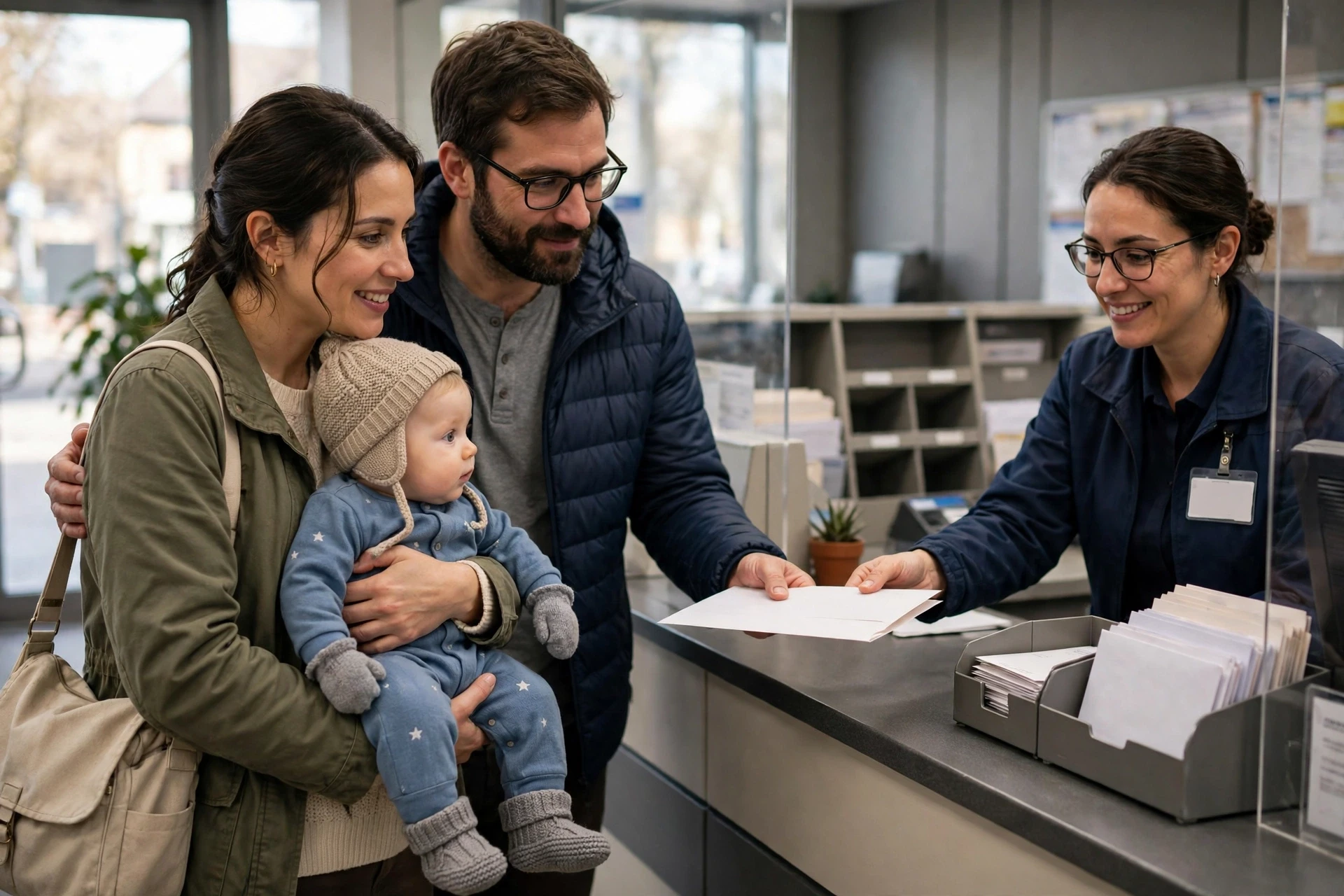
A short documents check, done at home, prevents most airport problems.
For a domestic flight in the United States, confirm that the accompanying adult has acceptable identification, that the baby is named on the booking, and that a birth certificate is packed in case the airline asks for proof of age for a lap infant.
For an international flight, confirm that the baby has a valid passport book, that the passport will remain valid for the whole trip, and that any destination entry requirements have been checked. If this is your first trip with a baby, sorting documents early removes one worry from the airport day. For a first flight with a baby, the documents check is short: adult identification, the baby’s passport book for an international flight, and any consent or custody papers that apply.
Keep documents in a single folder that stays in hand luggage, not in checked baggage. If a document is needed at check-in, at security, or at immigration, it should be reachable without opening a suitcase.
No. Children under 18 do not need identification for domestic flights under the security rule, and a baby does not need a passport for a domestic trip. An airline may still ask for proof of age for a lap infant, so carrying a birth certificate is a sensible precaution.
Yes. A baby needs their own passport book for international air travel, including as a lap infant. A passport card and a birth certificate are not substitutes for a passport book on a flight abroad.
No. Each traveller needs their own passport. A parent’s passport does not cover a child, even if the child is named in other family documents.
No. A passport card is not valid for international air travel. For a flight to Mexico, a baby needs a passport book.
A passport issued to a child under 16 is valid for 5 years. When it expires, the child must apply in person again; it cannot be renewed by mail.
The absent parent will usually need to provide a notarized Form DS-3053, Statement of Consent, within 90 days of signing. Families with sole custody or other special circumstances should check the State Department’s instructions for the documents that apply to them.
The rule to remember is simple. Inside the United States, a baby’s passport is not the document that gets the family through the airport. Outside the United States, by air, it is. Sorting that distinction early, and applying for a baby’s passport book well before an international trip, keeps the focus where it belongs: on the journey, not on paperwork at the gate.
A baby must be on the flight reservation even if the baby will sit on your lap and will not occupy a seat. That…
You can change a diaper on a plane, and the airplane lavatory is the place to do it. The usual plan is simple: change…
Gate checking a stroller lets you keep it through the airport until the airline collects it near boarding. The stroller then travels in the…