Flying with little ones
Flying With a 6 Month Old Baby on a Plane: The Complete Guide
Direct answer Flying with a 6-month-old is easier than flying with a toddler and different from flying with a newborn, because a 6-month-old is…
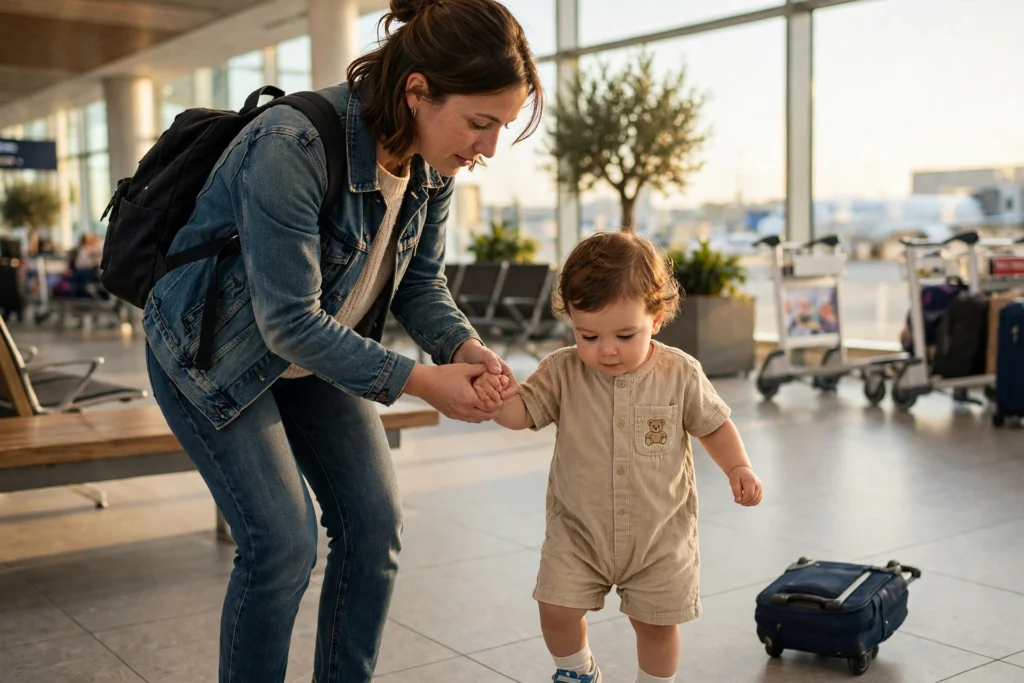
Flying with a 1-year-old is different from flying with a young baby, because a 1-year-old is usually mobile, alert, and unwilling to sit still for long. The plan that works is not “hope they sleep.” It is: decide lap or seat before you book, burn energy at the airport, pack in small reachable pouches, and rotate snacks and quiet toys in short blocks through the flight. A 1-year-old does not need fifteen toys. They need one new thing at a time, food at the right moments, and a chance to move whenever the seatbelt sign allows.
This guide is for a child around 12 months old, whether they are just walking, cruising along furniture, or already toddling confidently.
At 1, three things change at once. First, movement: a child who can walk, even unsteadily, wants to move, and being held for hours feels like a restriction rather than comfort. Second, attention: interest is intense but short, so one toy lasts minutes, not an hour. Third, routine: naps, meals, and snacks still structure the day, so a flight that ignores them is much harder than a flight that works around them.
That is also why the bassinet plan often stops working at this age. Many 1-year-olds are too long, too heavy, or too mobile for an airline bassinet, and bassinet limits vary by airline and aircraft. Do not build the whole flight around a bassinet. Have a lap or car-seat plan that works without one.
A child under 2 can usually travel as a lap infant, held by an adult, or in a purchased seat, in an approved child restraint. Age is judged on the date of each flight, not the date of booking, and only one lap infant is permitted per ticketed adult. If a child turns 2 during the trip, the return flight may need a purchased seat, so check the return date separately.
On major U.S. airlines, a domestic lap infant is usually free, while an international lap infant usually pays taxes plus a percentage of the adult fare — Delta, for example, generally charges 10% of the adult fare plus international taxes or fees. Those are general patterns, not a promise for your route: use the fare shown during your own booking.
For a 1-year-old, the seat decision is practical, not just financial. A short domestic flight on a lap can work well. A flight over about two hours, a long-haul flight, or a child who will not sit still is often calmer in a purchased seat with a familiar car seat. The Federal Aviation Administration states that the safest place for a child under 2 on a U.S. airplane is in an approved child restraint system, not in an adult’s lap, because arms cannot hold a child securely during unexpected turbulence. That is a safety recommendation, not a ban on lap travel.
If you buy a seat, the car seat must carry a label stating that it is certified for use in motor vehicles and aircraft. Choose a window seat where possible, avoid exit rows, and remember that booster seats are not permitted for use during taxi, takeoff, and landing.
For a domestic flight in the United States, children under 18 travelling with an adult do not need identification for security screening under the Transportation Security Administration’s rule, but an airline may still ask for proof of age for a lap infant, usually a birth certificate. Carry an original or photocopy in hand luggage, not only a phone photo. For an international flight, a baby needs their own passport book, even as a lap infant, and a passport card is not valid for international air travel.
At security, formula, breast milk, toddler drinks, and baby food are allowed in quantities over 3.4 ounces as medically necessary liquids. They do not need to fit in a quart-size bag, but they must be declared at the start of screening and removed for separate screening. Strollers, car seats, and carriers go through X-ray screening, and you carry your child through the metal detector. If you are gate-checking a stroller, confirm where you will collect it before you hand it over.
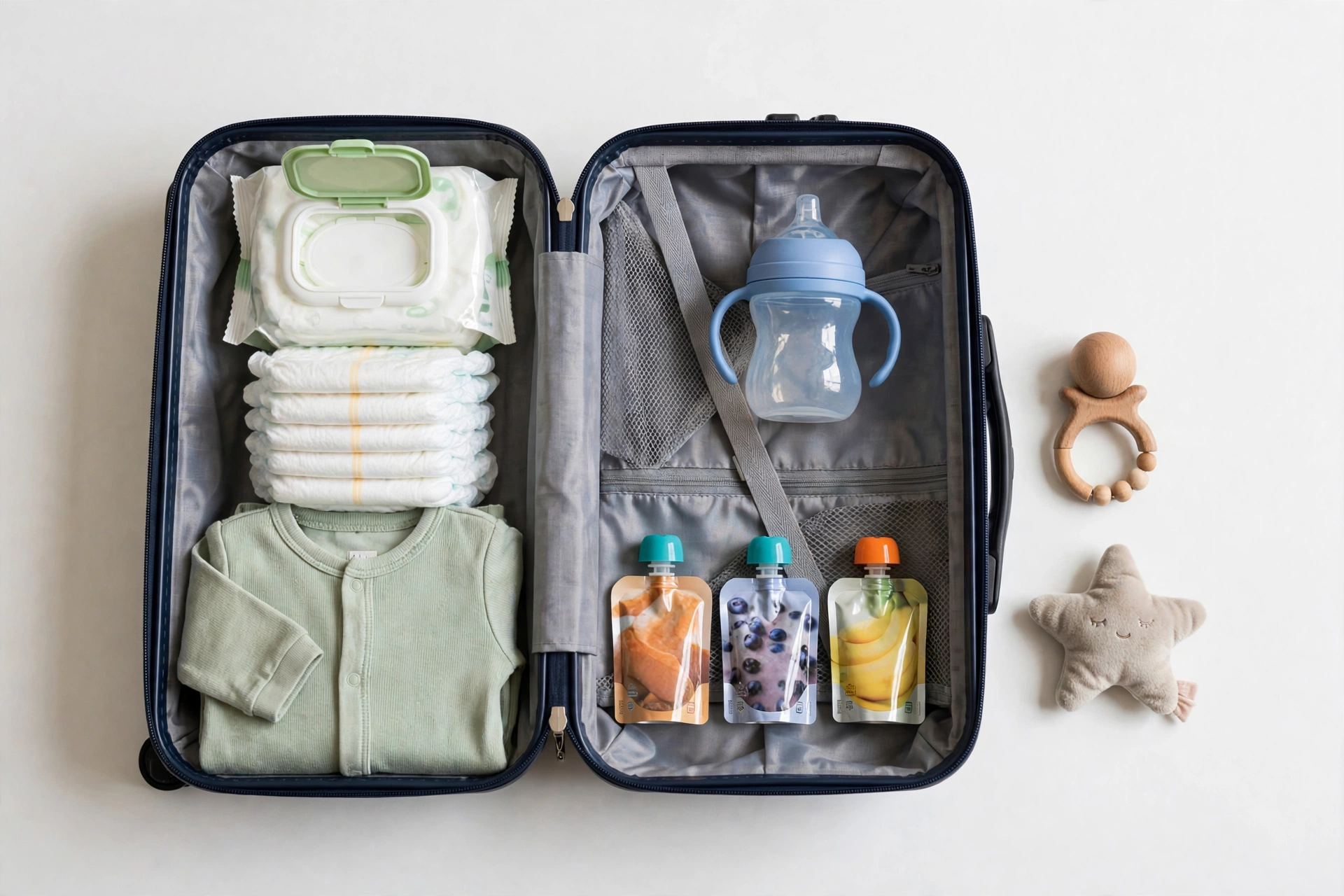
Do not pack one big bag and dig through it in the aisle. Pack three small units you can reach without standing up: a feeding pouch, a changing pouch, and an entertainment pouch. Keep the main bag at your seat and refill the small pouches from it.
The most common mistake with a 1-year-old is opening everything at once. A child who sees all the toys in the first twenty minutes has nothing new left for hour two. Run the flight in phases instead.
| Phase | What to do | Why it works |
|---|---|---|
| Takeoff | Offer a drink, a bottle, a sippy cup, or a chewable snack your child already eats. | Swallowing can help with ear pressure changes, and it gives the start of the flight a clear job. |
| First hour | Window looking, one quiet toy, a short walk up the aisle when the seatbelt sign is off. | Movement first, while energy is highest. Save screens and favourite items for later. |
| Middle of the flight | Slow snacks in small portions, one new toy at a time, a board book, then a second snack. | Food takes time at this age, and small portions stretch attention without a sugar rush. |
| Later in the flight | Now bring out the screen if you use one, downloaded and tested, with headphones your child has worn before. Then the comfort object and a wind-down routine. | The screen is the closer, not the opener, so it still feels new when tiredness arrives. |
| Descent and landing | Another drink or chewable snack, and keep everything packed except what you need for arrival. | Ear pressure changes again on descent, and a packed bag avoids a last-minute scramble at the gate. |
Good 1-year-old plane snacks are familiar, low-mess, and slow to eat: soft fruit pieces cut to a safe size for your child, cereal puffs, crackers, cheese pieces, and pouches your child already likes. Avoid sticky, crumbly, or sugary snacks that leave hands, clothes, and neighbours coated. Always follow your child’s usual feeding guidance and your pediatrician’s advice on foods, textures, and allergies. If your child has a food allergy, carry their usual supplies and tell the crew if you need help.
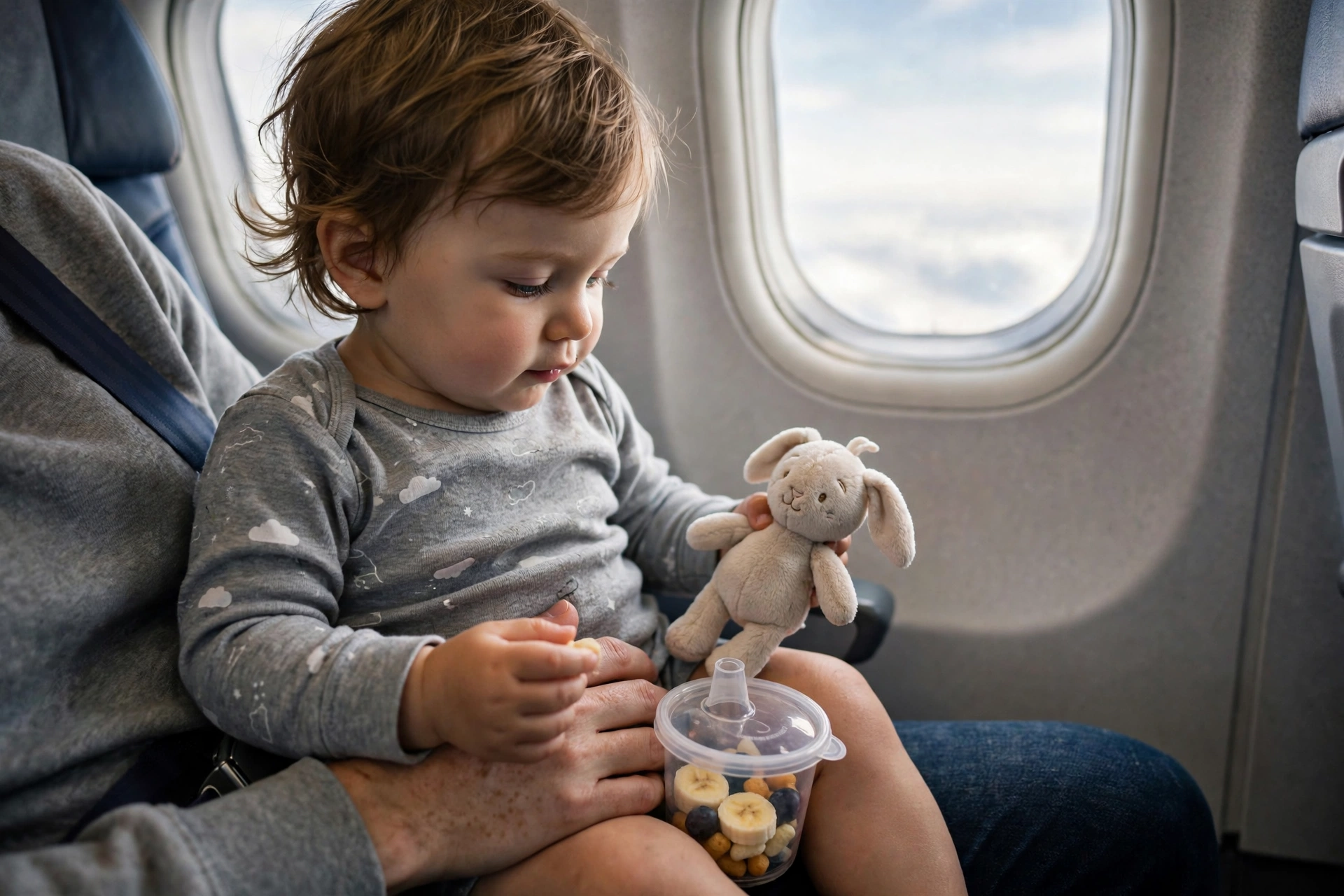
Some 1-year-olds sleep on planes. Many do not, and a daytime flight with a wide-awake 1-year-old is a normal outcome, not a failure. If your child sleeps, help the routine: familiar sleepwear, the same comfort object, a short story or song, and lights down as far as the cabin allows. If your child does not sleep, aim the flight at awake hours where you can, and fix the schedule at the destination rather than fighting it in the air.
Do not use medication intended to make a child sleep unless your child’s clinician advises it. For overnight flights, a purchased seat with a familiar car seat often gives a better sleep setup than a lap, because the child has a fixed, familiar place. For layovers, build in time to walk, eat, and change before the next flight.
A meltdown at 1 is usually hunger, tiredness, a wet diaper, discomfort, or simply too long without movement. Work through those in order before adding a new toy. Movement helps most: when the seatbelt sign is off, walk the aisle, visit the galley area, and let your child stand and stretch with you holding them securely. Never walk with a child during takeoff, landing, or turbulence, and follow crew instructions.
Other passengers have almost all been there, and a short period of crying does not make you a bad traveller. Stay calm, keep your voice low, and change one thing at a time. If your child is unwell, in pain, or you are concerned about their condition, tell a crew member rather than trying to manage the concern alone.
A 1-year-old’s flight does not need to be silent or perfect. It needs a seat decision made early, energy spent before boarding, food and novelty timed through the flight, and a bag that lets you reach the right thing without a search. Done that way, the flight becomes a series of short, manageable blocks — and the arrival is about the trip, not the recovery.
Yes. A child under 2 can usually travel as a lap infant, held by an adult, with only one lap infant per ticketed adult. On major U.S. airlines, a domestic lap infant is usually free, while an international lap infant usually pays taxes plus a percentage of the adult fare. Always check your airline’s own infant page for your route.
For a short flight, a lap infant often works well. For a flight over about two hours, a long-haul flight, or a child who will not sit still, a purchased seat with an approved car seat usually buys more calm, and it is the only way to guarantee that a car seat can be used on board. The Federal Aviation Administration states that an approved child restraint, not a lap, is the safest place for a child under 2.
Only foods your child already eats at home, in small, low-mess portions, with a drink or chewable snack at takeoff and descent. Formula, breast milk, toddler drinks, and baby food are allowed through U.S. security in quantities over 3.4 ounces as medically necessary liquids, declared at screening and removed for separate screening.
Sometimes, but often not. Bassinet weight, length, and mobility limits vary by airline and aircraft, and many 1-year-olds outgrow them. Check your airline’s limits before you plan around a bassinet, and have a lap or car-seat plan that works without one.
Rotate five or six small quiet items, one at a time, with slow snacks between them. Start with movement and window looking, use food in the middle of the flight, and save a screen, if you use one, for later. One new thing at a time lasts much longer than a bag opened all at once.
For a domestic U.S. flight, no passport is needed, although an airline may ask for proof of age for a lap infant. For an international flight by air, a baby needs their own passport book, even as a lap infant, and a passport card is not valid for international air travel.
Direct answer Flying with a 6-month-old is easier than flying with a toddler and different from flying with a newborn, because a 6-month-old is…
Dress your baby in soft layers that you can add or remove, with easy access for diaper changes and feeding. That single rule covers…
A baby must be on the flight reservation even if the baby will sit on your lap and will not occupy a seat. That…