Flying with little ones
Flying With a 6 Month Old Baby on a Plane: The Complete Guide
Direct answer Flying with a 6-month-old is easier than flying with a toddler and different from flying with a newborn, because a 6-month-old is…
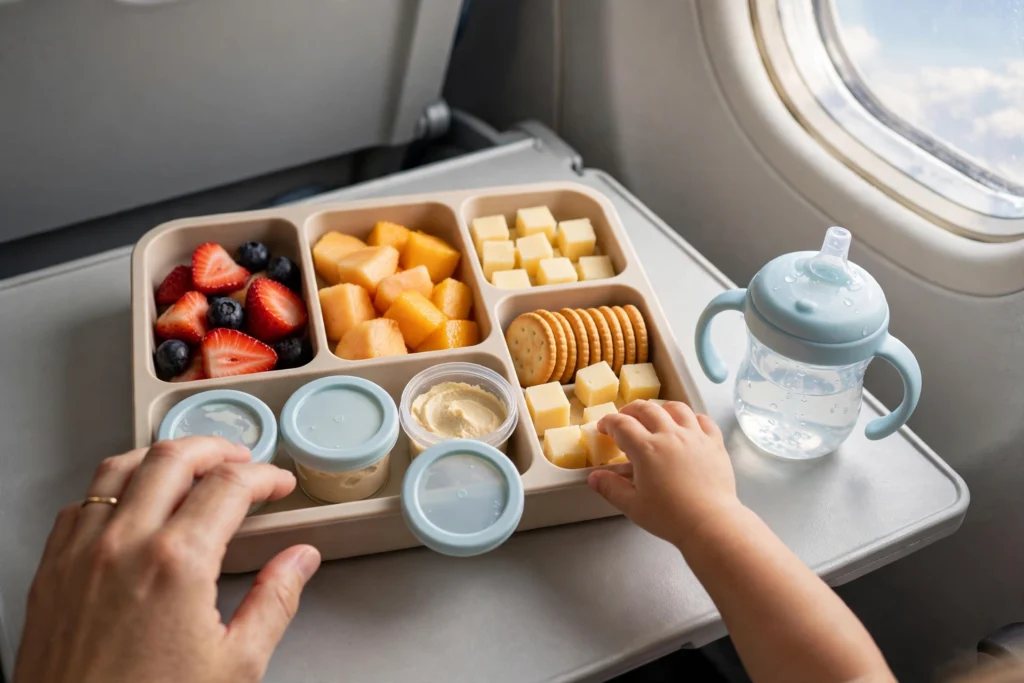
The best snacks for toddler on plane trips are familiar, low-mess, slow to eat, and easy to hand out one at a time. Pack small portions of foods your toddler already eats at home, keep them in separate small pouches, and bring more than you think you will need, because a delayed flight or a refused meal can turn a short snack into the main plan. This guide covers what works, what to skip, how security screening handles toddler food and drink, and what to pack for each age from 12 months to 3 years.
Toddlers between one and three eat very differently from a 6 month old baby, so the lists here start where baby food ends. Everything below assumes your child is sitting with you, awake for at least part of the flight, and eating foods they have already tried safely at home. Nothing here replaces your pediatrician’s advice, especially for allergies or a child with feeding difficulties.
A good plane snack passes five tests before it goes in the bag. First, it must be low-mess: dry or contained foods beat anything runny, crumbly, or sticky in a seat with no table space to spare. Second, it must be slow: small pieces that take time to pick up and chew buy you far more calm minutes than one large item eaten in thirty seconds. Third, it should include some protein or fat, such as cheese or a spread, so your toddler is not hungry again ten minutes later. Fourth, it must be quiet: no loud crunching packets, no rattling tins, and nothing that needs banging or shaking. Fifth, it must be familiar: a plane is a bad place to introduce a brand-new flavour, texture, or food your child has never tried.
Put those tests together and the winners are obvious: soft fruit pieces, cheese cubes, plain crackers, dry cereal, banana, and small sandwiches cut into fingers. The losers are just as clear: anything that stains, drips, melts quickly, needs a spoon and a bowl, or falls apart into a hundred crumbs on the seat.
Security screening is simpler than most parents fear. Solid snacks are generally allowed through screening in your carry-on, so crackers, cereal, fruit, cheese, and sandwiches are not a problem. Formula, breast milk, toddler drinks, and baby food are allowed in quantities over 3.4 ounces when they are for your child, and you should tell the officer you have them, take them out, and let them go through separate screening. Spreads and gels count as liquids under the usual rules, so yogurt, hummus, and peanut butter belong in the liquids bag or in small containers that follow the same limit, and it is worth checking the current rule before you fly, since screening practice can change.
Packing matters as much as the food itself. Use one small pouch or container per snack, and keep all of them in a single zip pouch inside your personal item, not buried in the main carry-on and not in the stroller you fold at the gate. Hand out one pouch at a time and put the pouch away before the next one comes out, because an open snack box with six choices turns into a negotiation, while one small choice at a time keeps the rhythm going. Keep wipes, a spare bag for rubbish, and a change of clothes within reach, since even a low-mess snack can end up on a sleeve.
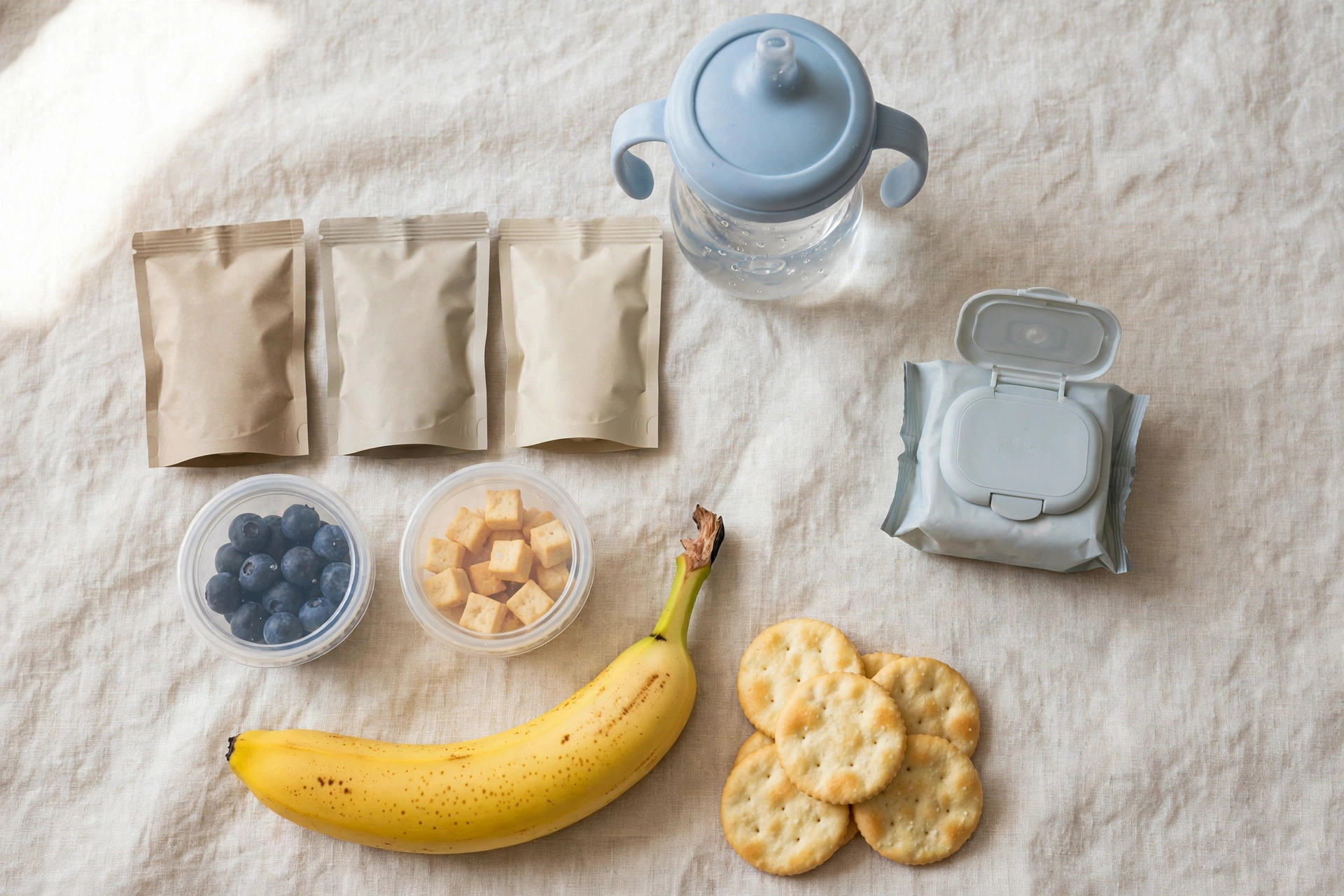
Age matters because chewing ability, appetite, and patience all change fast between one and three. Use your own child’s stage, not just the birthday, and only pack foods they already eat comfortably at home.
At this age, soft and small is everything. Pieces should be soft enough to mash, small enough to pick up with fingers, and served one or two at a time so your toddler is not overwhelmed.
By eighteen months most toddlers chew better and want more independence, so the same foods can come in slightly larger pieces, with a few new options added. This is also the age when holding their own cup and choosing between two pouches becomes part of the fun.
Two- and three-year-olds can handle a wider menu and a longer snack, and they enjoy a snack that takes a little work, such as peeling a banana or picking pieces from a cup. Keep portions small and keep the sugar low, since a sugar rush in a confined seat helps nobody.
Chewing and swallowing during takeoff and descent can help a toddler’s ears feel more comfortable as cabin pressure changes, and a snack is a practical way to encourage both. This is not a medical promise: it does not guarantee comfort, and some toddlers will still cry or fuss. It is simply a useful reason to save a slow, chewable snack for those two parts of the flight rather than serving everything during cruise.
Good choices for these moments are foods that take time to chew and swallow, such as a small cup of soft pieces, a cheese string, or a banana eaten slowly. A sippy cup of water or milk works the same way, since drinking also involves swallowing. Avoid starting a brand-new food at this moment, and avoid anything that needs your toddler to lie back or tilt their head, since they should be sitting upright and settled for takeoff and landing.
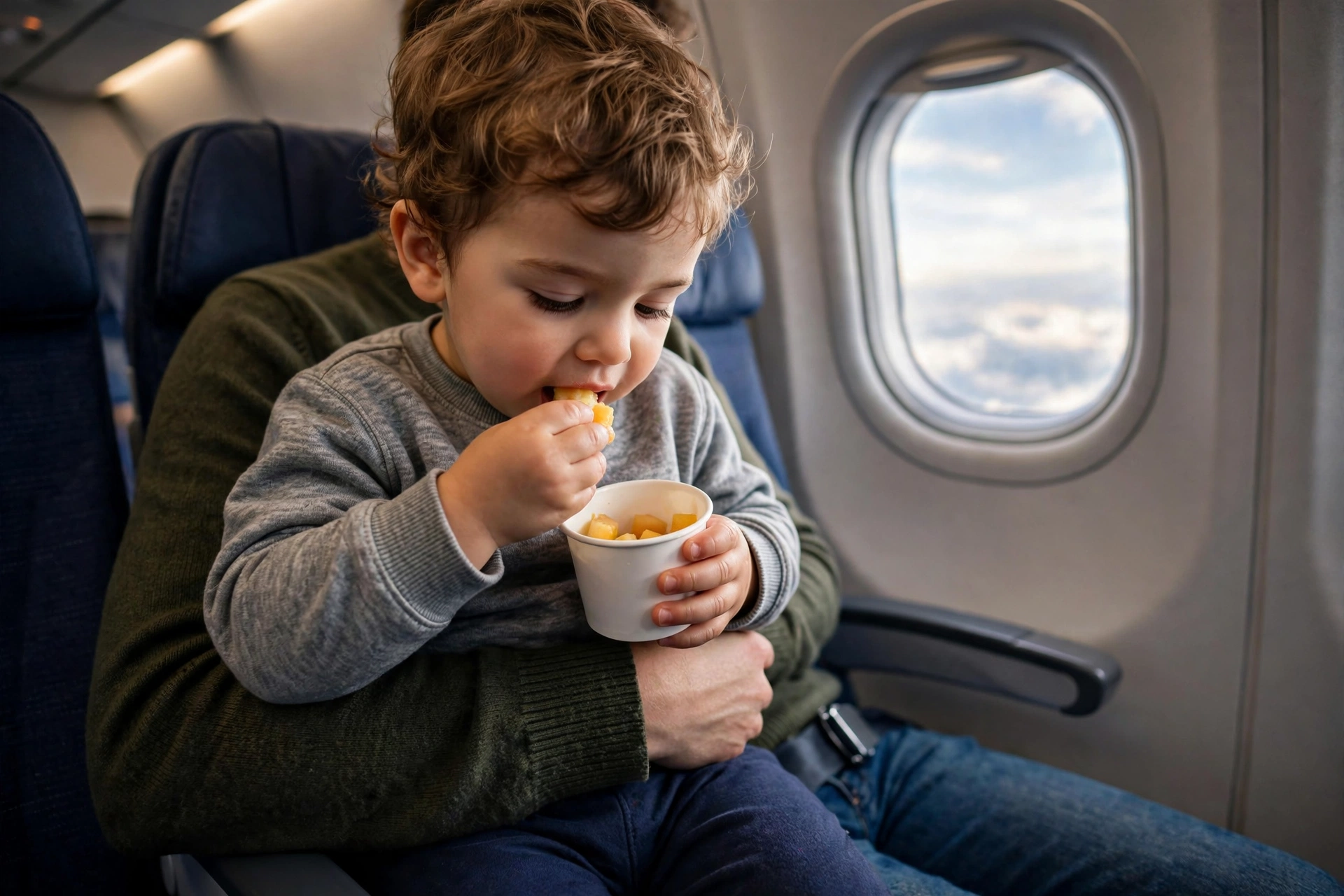
Some foods cause trouble out of proportion to their size, and leaving them at home is the easiest decision in this guide.
On choking safety in general, keep pieces small, cut round foods such as grapes lengthwise, serve food while your toddler is sitting upright and supervised, and never offer food while they are running, laughing hard, or lying flat. If your child has any feeding or swallowing difficulty, follow your pediatrician’s guidance rather than a general list.
Think of snacks as a schedule, not a single bag opened at once. Before boarding, offer a proper meal or a filling snack at the airport so nobody boards already hungry. If this is your child’s first flight, keep the plan even simpler and lean on the one or two foods you know they love. During takeoff, bring out the slow chewable snack saved for that moment. In cruise, rotate one small pouch at a time, with water offered often, and save a favourite snack as a backup for delays or a refused meal. On a long layover, use the break to refill water, restock from an airport shop, and throw away empty pouches, so the bag is tidy for the next leg. For descent, repeat the takeoff plan with another slow snack or a drink.
One timing mistake is common: serving everything in the first hour because your toddler is excited, then having nothing left for the last hour when patience is gone. Hold one pouch back on purpose, even if the flight is short, and treat it as your reserve.
Run through this list the night before, and pack the snack bag last so it sits on top.
Pack more than you expect to use. Five to seven small pouches cover a short flight, and a long flight or a delay can easily double that. Small pouches matter more than a big bag, because you can hand out one at a time and keep the rest fresh.
Formula, breast milk, toddler drinks, and baby food are allowed over 3.4 ounces for your child, and you should declare them at screening and let them go through separate screening. Water for your toddler follows the same child-related allowance in practice, but keep it in a sippy cup and declare it with the rest, and check the current rule before you travel.
A slow, chewable snack or a drink encourages chewing and swallowing, which can help ears feel more comfortable as pressure changes. It is not a guarantee, and if your toddler is upset or in pain, comfort and cuddles matter more than finishing a snack.
Pouches are convenient and low-mess, but they are eaten fast and do not keep a toddler busy for long. They work best as one option among others, alongside finger foods that take longer to eat.
Airport shops are a useful top-up, especially on a long layover, but choice is limited, prices are higher, and your toddler’s familiar foods may not be there. Pack the core snacks from home and use the airport only for extras such as fruit or water.
Refusal is normal, especially when a toddler is tired, excited, or unsettled by the cabin. Offer water, try again in twenty minutes with a different pouch, and do not turn it into a battle. A refused snack is not a failed plan, and the reserve pouch is there for exactly this moment.
Direct answer Flying with a 6-month-old is easier than flying with a toddler and different from flying with a newborn, because a 6-month-old is…
Direct answer Flying with a 1-year-old is different from flying with a young baby, because a 1-year-old is usually mobile, alert, and unwilling to…
Dress your baby in soft layers that you can add or remove, with easy access for diaper changes and feeding. That single rule covers…