Flying with little ones
Airplane Bassinet Seats: Airline Rules and How to Actually Book One
The bulkhead bassinet is the best free upgrade in family travel — if you know how to get it.
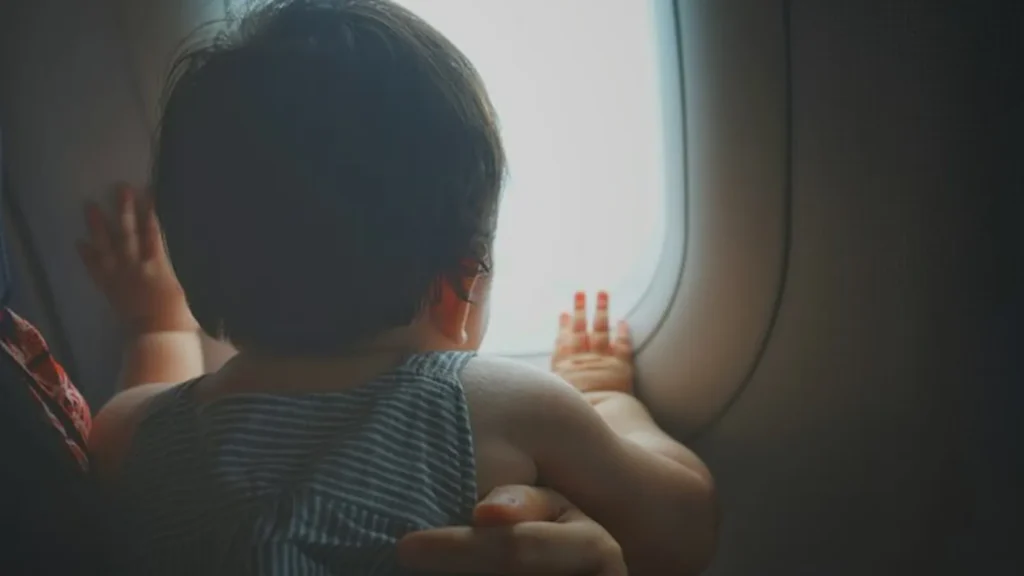
Nobody tells you this at the baby stage: the hard flights come later. A four-month-old sleeps through turbulence; a twenty-month-old has opinions, legs, and no interest in your seatbelt-sign theology. One to three is the peak-difficulty window for air travel, and pretending otherwise is how flights go wrong.
The good news: toddler flights are a logistics problem, and logistics problems have solutions. The strategy is simple — burn energy before boarding, manage the seat like a small campsite, and sequence your entertainment instead of dumping it.
A toddler boards the plane with a full battery. Your job is to drain it legally. Skip the pre-flight nap if the flight overlaps sleep time, walk the terminal instead of sitting at the gate, and let them climb whatever the airport permits. The stroller does the carrying; the toddler does the walking. Our airport survival guide covers terminal tactics in detail.
Over two, a seat is mandatory anyway. Under two, this is the age where the lap option stops being a bargain and starts being a wrestling match. If the flight is over two hours, a toddler’s own seat — with a car seat they already know, or an approved harness — usually buys more calm than it costs. A familiar car seat also solves the bring-or-rent question at the other end.
One small backpack of entertainment, chosen the night before, half of it new-to-them. Rotating five things beats carrying fifteen. And a full change of clothes for the toddler plus a shirt for you lives in the seat pocket, not the overhead — the day you skip this is the day of the juice incident.
Some toddlers sleep on planes; some treat the cabin as a stimulant. Work with the one you have. For sleepers: board in pyjamas on evening flights, bring the exact comfort object, run the bedtime script (story, song, lights). For non-sleepers: aim the flight at awake hours and accept the day for what it is — and fix the schedule at the destination using our jet lag guide.
For flights over two hours with a child who sleeps in the car — usually yes. It is containment, familiarity and sleep in one object. For short hops, an approved harness or the seatbelt does the job with less hauling.
Movement first: the galley walk, the toilet tour. Then food, then novelty. And remember every parent on the plane has been there; the strangers judging you are rarer than they feel at row 34.
Window. It contains, it entertains, and it puts one parent between the toddler and freedom.
The bulkhead bassinet is the best free upgrade in family travel — if you know how to get it.
Baby feeds are exempt from the liquid rules — here is how screening actually works.
Light, feeds and patience: how babies actually adjust to new time zones.